There used to be a tiny German butcher shop tucked behind a laundromat in my old neighborhood that made the most incredible bratwurst. When they closed three years ago—just a handwritten sign on the door one Tuesday—I honestly felt a little lost. That smoky, juicy, perfectly seasoned sausage became my gold standard, and no store-bought version ever came close.
After maybe a dozen attempts—some burned, some bland, one that my husband politely called “interesting”—I finally cracked the code. This Oktoberfest bratwurst and sauerkraut skillet is the one that made me stop searching. The secret, let me tell you, is in the layering. You don’t just throw everything in a pan. You build flavor, one ingredient at a time, until the whole kitchen smells like a Munich beer hall.
I remember the first time I got it right. It was a rainy Sunday afternoon, and I was determined to recreate that memory. The sizzle when the brats hit the hot skillet, the way the caraway seeds toasted in the butter, the deep, tangy aroma of the sauerkraut melting into the broth—it all came together. My neighbor Mike actually knocked on the door, drawn by the smell, and stayed for dinner. That’s when I knew I had it.
This isn’t just another sausage recipe. It’s the one that brings people to your kitchen, the one that makes you close your eyes after the first bite. Maybe you’ve been there—chasing a flavor from a closed-down spot or a trip you took years ago. This skillet is your ticket back. Let’s make it together.
Why You’ll Love This Recipe
This Oktoberfest bratwurst and sauerkraut skillet has become my go-to for fall gatherings, and for good reason. It delivers all the cozy, hearty flavors of a German beer hall without requiring a reservation or a plane ticket.
- Quick & Easy: From start to finish, this meal comes together in about 40 minutes. Perfect for those weeknights when you want something special but don’t have hours to spend.
- Simple Ingredients: No exotic grocery runs needed. You likely have most of these pantry staples already—onions, garlic, broth, and spices.
- Perfect for Oktoberfest at Home: Whether you’re hosting a party or just want to celebrate the season, this skillet is the centerpiece your table needs.
- Crowd-Pleaser: Even picky eaters and kids love this dish. The brats are juicy, the kraut is mellow, and everything gets along beautifully.
- Unbelievably Delicious: The combination of caramelized onions, tangy sauerkraut, and perfectly browned bratwurst is pure comfort food magic.
What makes this recipe different from the rest? It’s the technique of searing the brats first, then letting them finish cooking in the flavorful broth and kraut. This keeps the sausages incredibly juicy while infusing them with all those savory, tangy notes. Plus, I’ve perfected the balance of seasonings—just enough caraway and mustard seeds to complement without overwhelming. This isn’t just another version of bratwurst and sauerkraut. It’s your new favorite way to make it.
Honestly, this is the kind of meal that makes you slow down and actually taste your food. It’s hearty enough to satisfy after a long day, yet simple enough to make on a whim. Perfect for impressing guests without stress, or turning a simple Tuesday into something memorable.
What Ingredients You Will Need
This Oktoberfest bratwurst and sauerkraut skillet uses simple, wholesome ingredients to deliver bold flavor and satisfying texture without the fuss. Most of these are pantry staples, which makes this recipe perfect for last-minute cravings.
- Bratwurst: 4-6 fresh bratwurst links (about 1.5 lbs). I prefer Johnsonville or a local butcher’s fresh brats for the best texture and flavor. Avoid pre-cooked brats if possible—they won’t get that beautiful sear.
- Sauerkraut: 1 (14-ounce) bag or jar, drained but not rinsed. Look for refrigerated sauerkraut in the deli section for the best tangy flavor. The canned stuff works in a pinch, but the texture is softer.
- Yellow Onion: 1 large onion, thinly sliced. A sweet onion like Vidalia works beautifully here too.
- Garlic: 3 cloves, minced. Fresh garlic makes a difference, but jarred minced garlic is fine in a hurry.
- Chicken Broth: 1/2 cup. Low-sodium is best so you can control the salt. Vegetable broth works too.
- Butter: 2 tablespoons, unsalted. Adds richness to the onions and helps with browning.
- Caraway Seeds: 1 teaspoon. This is the secret ingredient that gives the dish that authentic German flavor. Don’t skip it!
- Brown Mustard: 1 tablespoon. Whole grain or Dijon both work. Adds a lovely tang and depth.
- Apple Cider Vinegar: 1 tablespoon. Brightens everything up and balances the richness.
- Salt and Black Pepper: To taste. Go easy on the salt since the brats and sauerkraut are already salty.
- Fresh Parsley: For garnish, optional but pretty. A little green on top makes the dish pop.
For a touch of sweetness, you can add 1 tablespoon of brown sugar or maple syrup to the kraut mixture. I sometimes do this when I want a slightly milder, more kid-friendly version. For a beer-infused twist, swap half the chicken broth with a dark German beer like a dunkel or bock—it adds incredible depth.
Equipment Needed
You don’t need fancy equipment for this Oktoberfest bratwurst and sauerkraut skillet, which is part of its charm. Here’s what you’ll need:
- Large Skillet or Dutch Oven: A 12-inch skillet with a lid is ideal. Cast iron works beautifully for even browning. I use my trusty Lodge cast iron skillet that I’ve had for years—it just gets better with age.
- Tongs: For turning the brats without piercing them. Piercing releases the juices, and we want those locked in.
- Cutting Board and Chef’s Knife: For slicing the onion and mincing the garlic.
- Wooden Spoon or Spatula: For stirring the onions and sauerkraut without scratching your pan.
- Measuring Spoons: For the spices and vinegar.
- Lid or Foil: To cover the skillet while the brats finish cooking. If your skillet doesn’t have a lid, a sheet of aluminum foil works perfectly.
If you don’t have a cast iron skillet, a heavy-bottomed stainless steel or non-stick pan works just fine. The key is even heat distribution. I’ve made this in a cheap non-stick pan before, and it still turned out great—you just have to watch the heat more carefully to avoid burning the onions.
Preparation Method
- Prep the Ingredients: Thinly slice your onion and mince the garlic. Drain the sauerkraut in a colander but don’t rinse it—you want that tangy flavor. Pat the bratwurst dry with paper towels. This helps them brown better.
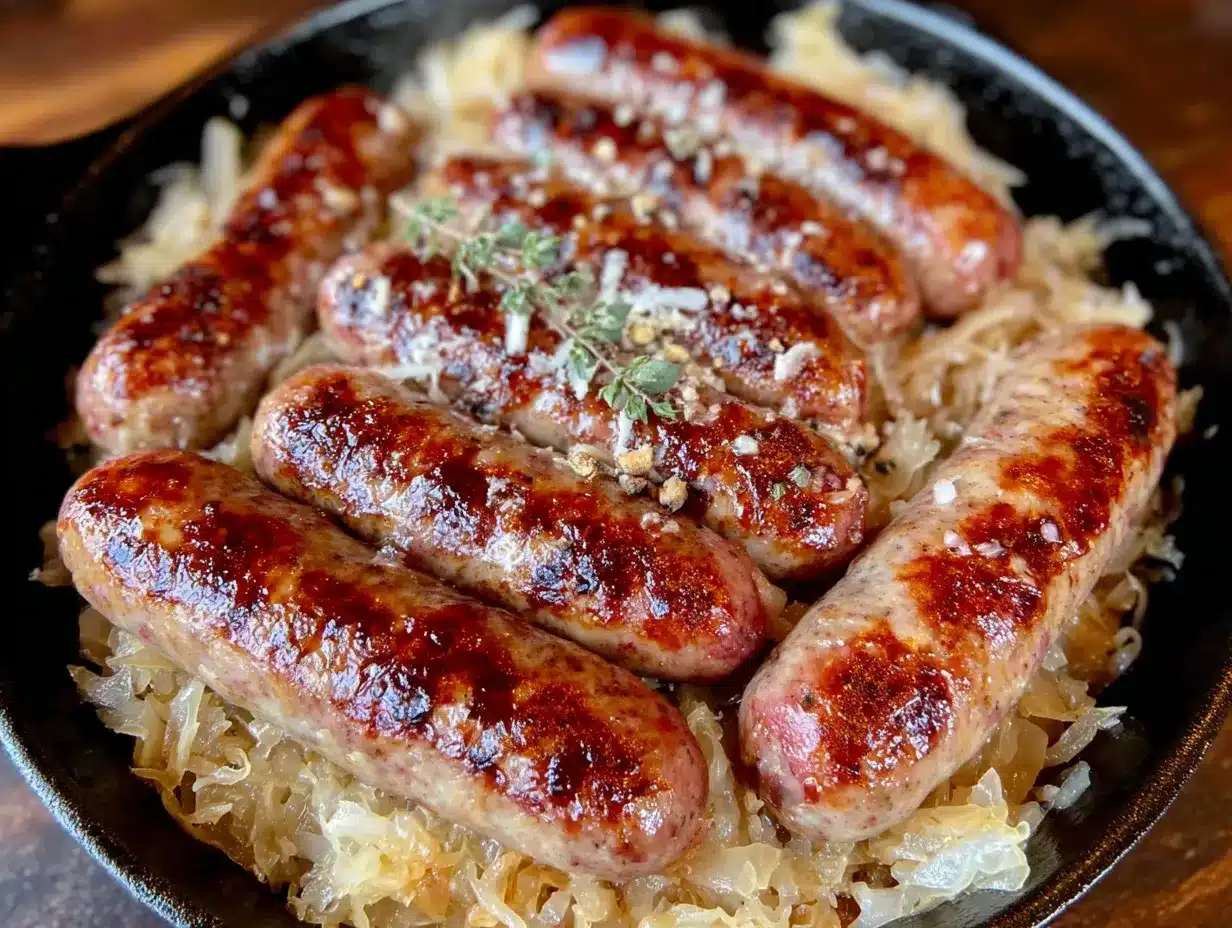
- Brown the Brats: Heat 1 tablespoon of butter in your large skillet over medium-high heat. Once it’s sizzling, add the bratwurst. Cook for about 4-5 minutes per side, until they’re deeply browned all over. Don’t crowd the pan—if your skillet is small, do this in batches. The brats should have a nice, dark crust. Remove them to a plate and set aside.
- Cook the Onions: Reduce the heat to medium. Add the remaining 1 tablespoon of butter to the pan. Toss in the sliced onions and cook, stirring occasionally, for about 8-10 minutes. You want them soft and golden, not crispy. Scrape up any browned bits from the bottom of the pan—that’s pure flavor.
- Add Garlic and Spices: Stir in the minced garlic and caraway seeds. Cook for about 30 seconds until fragrant. Your kitchen will smell incredible at this point.
- Build the Kraut Mixture: Add the drained sauerkraut to the pan. Stir in the brown mustard, apple cider vinegar, and chicken broth. If you’re using brown sugar or beer, add it now. Give everything a good stir to combine.
- Return the Brats: Nestle the browned bratwurst back into the skillet, pushing them down into the sauerkraut mixture. The liquid should come about halfway up the sides of the brats. If it doesn’t, add a splash more broth.
- Simmer and Finish: Bring the mixture to a gentle simmer. Cover the skillet with a lid or foil. Reduce the heat to low and let it cook for 15-20 minutes. The brats will finish cooking through and absorb all those wonderful flavors. The sauerkraut will soften and meld with the broth.
- Rest and Serve: Turn off the heat and let the skillet rest, covered, for 5 minutes. This allows the juices to redistribute. Taste the sauerkraut and adjust seasoning with salt and pepper if needed. Garnish with fresh parsley if desired.
A quick note: If you want extra caramelized onions, cook them a bit longer before adding the garlic. I’ve let mine go for 15 minutes before when I had the time, and the sweetness was amazing. Also, if the liquid evaporates too quickly during simmering, just add a splash more broth. The goal is a slightly saucy kraut, not a dry one.
Cooking Tips & Techniques
After making this Oktoberfest bratwurst and sauerkraut skillet more times than I can count, I’ve picked up a few tricks that make a real difference.
Don’t Prick the Brats: This is the number one mistake people make. Pricking the sausages releases their juices, and you end up with dry brats. Let them brown naturally, and they’ll stay plump and juicy.
Low and Slow for the Kraut: Sauerkraut benefits from gentle cooking. High heat can make it tough and overly sour. A long, slow simmer mellows the tang and allows the flavors to marry beautifully.
Toast Your Caraway Seeds: For an extra layer of flavor, toss the caraway seeds in the hot butter for about 30 seconds before adding the onions. This releases their essential oils and makes them more aromatic. I learned this after a batch that tasted flat—now I never skip it.
Use a Meat Thermometer: If you’re unsure about doneness, bratwurst is safe at 160°F (71°C). Insert the thermometer into the thickest end of the sausage. This takes the guesswork out and guarantees perfectly cooked brats every time.
Multitask Like a Pro: While the brats are browning, you can slice the onions. While the onions are cooking, mince the garlic and drain the sauerkraut. This keeps the process moving and gets dinner on the table faster.
One of my biggest failures? I once forgot to drain the sauerkraut and ended up with a watery, bland mess. The extra liquid diluted all the seasoning. So yes, drain it well—but don’t rinse. That tang is part of the magic.
Variations & Adaptations
This Oktoberfest bratwurst and sauerkraut skillet is wonderfully adaptable. Here are some ways to make it your own:
- Beer-Braised Version: Replace half the chicken broth with a dark German beer like a dunkel, bock, or even a stout. The beer adds a malty richness that’s incredible. Just let it simmer for an extra 5 minutes to cook off the alcohol.
- Apple and Kraut Twist: Add one thinly sliced apple (Granny Smith or Honeycrisp) along with the onions. The sweetness of the apple balances the tangy sauerkraut beautifully. I tried this on a whim last fall, and now it’s my husband’s favorite version.
- Spicy Variation: Use hot Italian sausage or bratwurst with red pepper flakes. Add a pinch of cayenne pepper to the kraut mixture for extra heat. This is great for those who like a little kick with their comfort food.
- Low-Carb Adaptation: Skip the beer and any added sugar. Serve the skillet as-is—it’s naturally low in carbs and packed with protein. The sauerkraut is also great for gut health.
- Vegetarian Option: Swap the bratwurst for plant-based sausages (I like Beyond or Field Roast). Reduce the cooking time since they don’t need to cook through—just brown and heat. The rest of the recipe stays the same.
For a fun twist, try adding sliced potatoes to the skillet during the last 10 minutes of simmering. They soak up all that flavorful broth and become incredibly tender. It turns the dish into a complete one-pan meal.
Serving & Storage Suggestions
This Oktoberfest bratwurst and sauerkraut skillet is best served hot, straight from the pan. The aroma alone will have everyone gathering around the table.
Serving Ideas: Spoon the sauerkraut onto plates and top with a bratwurst. A dollop of whole-grain mustard on the side is non-negotiable in my house. Serve with crusty bread or soft pretzels to soak up the juices. For a heartier meal, add mashed potatoes or German potato salad. A cold German beer or a crisp apple cider is the perfect drink pairing.
Storage: Leftovers keep well in an airtight container in the refrigerator for up to 4 days. The flavors actually deepen overnight as the brats absorb more of the kraut mixture. I often make a double batch just for the leftovers.
Reheating: Reheat gently on the stovetop over medium-low heat, adding a splash of broth or water if the mixture seems dry. You can also microwave individual portions for 1-2 minutes, though the stovetop method preserves the texture better. Avoid high heat, which can toughen the brats.
Freezing: This skillet freezes beautifully. Let it cool completely, then transfer to a freezer-safe container. It will keep for up to 3 months. Thaw overnight in the refrigerator before reheating. I’ve pulled this out on busy weeknights and it tastes just as good as the day I made it.
Nutritional Information & Benefits
Per serving (1 bratwurst with about 1/2 cup sauerkraut mixture):
- Calories: Approximately 380
- Protein: 22g
- Fat: 28g
- Carbohydrates: 10g
- Fiber: 3g
- Sugar: 4g
- Sodium: 1100mg (varies by brat brand and sauerkraut)
Health Benefits: Sauerkraut is a fermented food packed with probiotics that support gut health. It’s also rich in vitamin C and iron. Bratwurst provides high-quality protein and B vitamins. Onions and garlic are known for their anti-inflammatory properties. While this dish is higher in sodium and fat, it’s a satisfying, nutrient-dense meal when enjoyed in moderation as part of a balanced diet.
Dietary Considerations: This recipe is naturally gluten-free (check your bratwurst labels to be sure). It’s also low-carb and keto-friendly if you skip any added sugar. For a dairy-free version, use olive oil instead of butter.
Conclusion
This Oktoberfest bratwurst and sauerkraut skillet is more than just a recipe—it’s a little celebration in a pan. It brings the warmth and coziness of fall into your kitchen without requiring a plane ticket to Munich. The best part? It’s forgiving, adaptable, and always delicious.
I love that this dish connects me to that little butcher shop and the memory of that first perfect bite. But now, it’s become its own thing—a recipe that my family asks for, that neighbors stop by for, that makes ordinary weeknights feel special. I hope it becomes that for you too.
Don’t be afraid to make it your own. Add more mustard, skip the caraway, throw in an apple—this skillet welcomes all kinds of twists. And when you make it, I’d love to hear about it. Drop a comment below and tell me how yours turned out. Did you add a secret ingredient? Serve it with something unexpected? Share your story—we’re all here chasing those perfect bites together.
Now go preheat that skillet. Your kitchen is about to smell amazing.
Frequently Asked Questions
Can I use pre-cooked bratwurst for this recipe?
You can, but the texture won’t be as good. Pre-cooked brats are already fully cooked, so they won’t absorb as much flavor from the kraut mixture. If you use them, skip the browning step and just heat them through in the simmering liquid for about 10 minutes.
How do I keep the bratwurst from splitting while cooking?
The key is to not prick them and to use medium heat. High heat can cause the casings to burst. Also, let them come to room temperature for 15 minutes before cooking—this helps them cook more evenly.
Can I make this Oktoberfest bratwurst and sauerkraut skillet in a slow cooker?
Yes! Brown the brats and onions in a skillet first, then transfer everything to a slow cooker. Cook on low for 4-6 hours or on high for 2-3 hours. The flavor will be slightly different—less concentrated—but it’s a great hands-off option.
What can I serve with this dish besides bread or potatoes?
This skillet pairs beautifully with roasted vegetables like Brussels sprouts or carrots. A simple green salad with a tangy vinaigrette also cuts through the richness nicely. For a true Oktoberfest spread, add soft pretzels with beer cheese and apple strudel for dessert.
How can I reduce the sodium in this recipe?
Use low-sodium chicken broth and look for reduced-sodium bratwurst. You can also rinse the sauerkraut briefly under cold water to remove some salt, though you’ll lose a bit of tang. Skip the added salt entirely and rely on the mustard and vinegar for flavor.
Pin This Recipe!
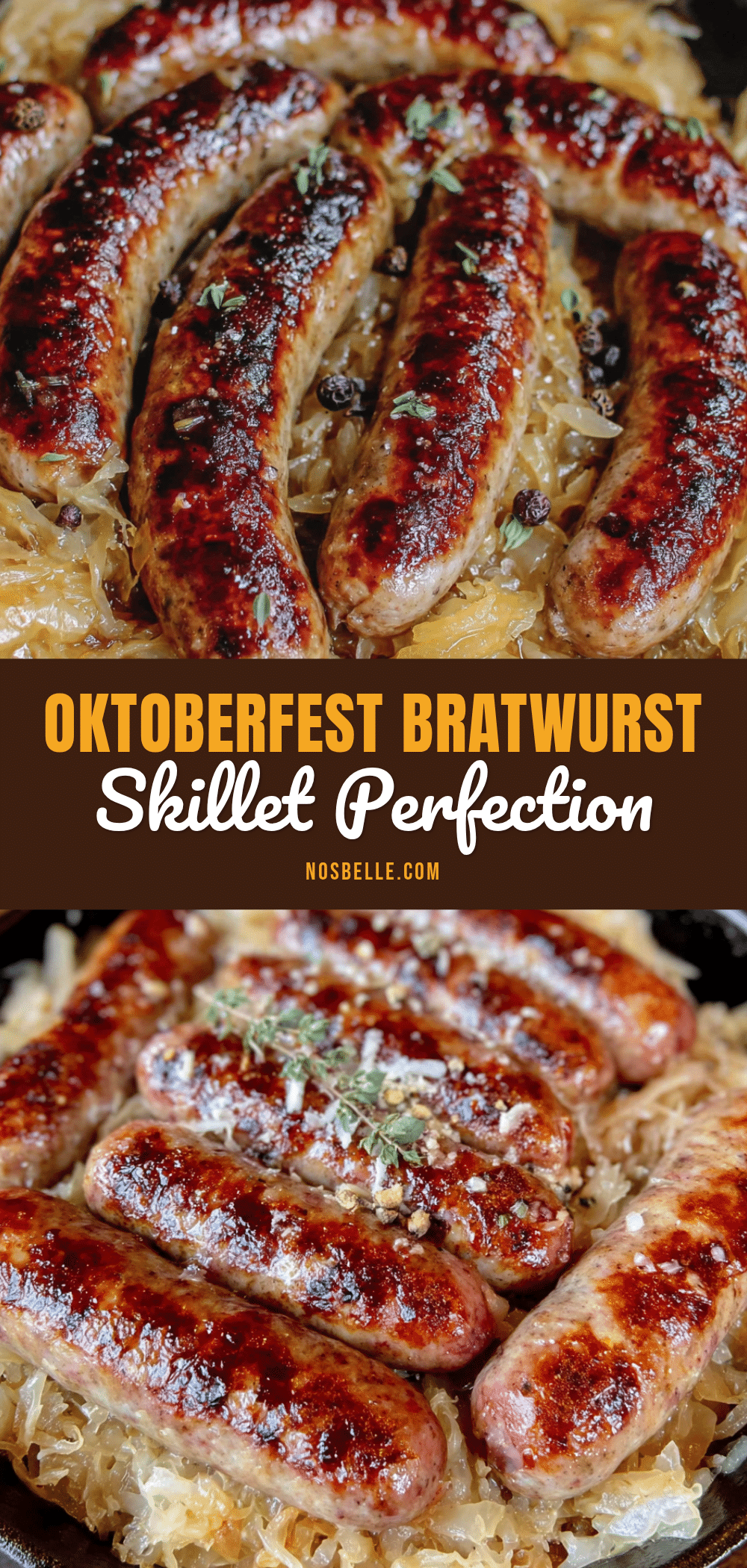
Best Homemade Oktoberfest Bratwurst and Sauerkraut Skillet

This Oktoberfest bratwurst and sauerkraut skillet delivers all the cozy, hearty flavors of a German beer hall without requiring a reservation or a plane ticket. It’s quick, easy, and perfect for fall gatherings.
- Prep Time: 10 minutes
- Cook Time: 30 minutes
- Total Time: 40 minutes
- Yield: 4 servings 1x
- Category: Main Course
- Cuisine: German
Ingredients
- 4–6 fresh bratwurst links (about 1.5 lbs)
- 1 (14-ounce) bag or jar sauerkraut, drained but not rinsed
- 1 large yellow onion, thinly sliced
- 3 cloves garlic, minced
- 1/2 cup low-sodium chicken broth
- 2 tablespoons unsalted butter
- 1 teaspoon caraway seeds
- 1 tablespoon brown mustard (whole grain or Dijon)
- 1 tablespoon apple cider vinegar
- Salt and black pepper to taste
- Fresh parsley for garnish (optional)
- 1 tablespoon brown sugar or maple syrup (optional, for sweetness)
- 1/4 cup dark German beer (optional, for beer-infused twist)
Instructions
- Prep the Ingredients: Thinly slice your onion and mince the garlic. Drain the sauerkraut in a colander but don’t rinse it. Pat the bratwurst dry with paper towels.
- Brown the Brats: Heat 1 tablespoon of butter in your large skillet over medium-high heat. Once sizzling, add the bratwurst. Cook for about 4-5 minutes per side, until deeply browned all over. Remove to a plate and set aside.
- Cook the Onions: Reduce heat to medium. Add the remaining 1 tablespoon of butter. Toss in the sliced onions and cook, stirring occasionally, for about 8-10 minutes until soft and golden. Scrape up any browned bits from the bottom of the pan.
- Add Garlic and Spices: Stir in the minced garlic and caraway seeds. Cook for about 30 seconds until fragrant.
- Build the Kraut Mixture: Add the drained sauerkraut to the pan. Stir in the brown mustard, apple cider vinegar, and chicken broth. If using brown sugar or beer, add it now. Stir to combine.
- Return the Brats: Nestle the browned bratwurst back into the skillet, pushing them down into the sauerkraut mixture. The liquid should come about halfway up the sides of the brats. Add a splash more broth if needed.
- Simmer and Finish: Bring the mixture to a gentle simmer. Cover the skillet with a lid or foil. Reduce heat to low and let it cook for 15-20 minutes.
- Rest and Serve: Turn off the heat and let the skillet rest, covered, for 5 minutes. Taste the sauerkraut and adjust seasoning with salt and pepper if needed. Garnish with fresh parsley if desired.
Notes
Don’t prick the brats—this releases juices and makes them dry. For extra caramelized onions, cook them longer before adding garlic. If liquid evaporates too quickly during simmering, add a splash more broth. The goal is a slightly saucy kraut, not a dry one.
Nutrition
- Serving Size: 1 bratwurst with abo
- Calories: 380
- Sugar: 4
- Sodium: 1100
- Fat: 28
- Saturated Fat: 10
- Carbohydrates: 10
- Fiber: 3
- Protein: 22
Keywords: Oktoberfest, bratwurst, sauerkraut, skillet, German, fall, one-pan, comfort food