My neighbor across the hall, a retired chef named Maria, watched me fumbling with three separate pans one Tuesday evening. She didn’t say anything at first. Then she knocked on my door holding a single sheet pan, still warm from her oven, and said, “You’re working too hard. Let the pan do the work.” That was five years ago, and honestly, I haven’t looked back since. That first bite of perfectly flaky salmon alongside tender, caramelized asparagus changed everything about how I approach weeknight cooking.
I mean, let’s be real here. I used to think a proper dinner required multiple pots, constant stirring, and a sink full of dishes afterward. Maria’s sheet pan method showed me something different—that simple ingredients, treated with a little respect and the right heat, can create something genuinely memorable. The salmon came out with that delicate crust on the outside while staying buttery and tender inside. The asparagus had those gorgeous charred edges that made it taste almost sweet. And the cleanup? One pan, five minutes, done.
Maybe you’ve been there too. Standing in your kitchen wondering if you have the energy for another complicated recipe after a long day. Or trying to eat lighter without sacrificing the satisfaction of a real meal. This salmon sheet pan dinner answers all of that. It’s the kind of recipe that became a weekly staple in my home, and I keep coming back to it because it delivers every single time without any drama. The key is trusting the process and letting the oven do its magic while you sit down and actually enjoy your evening.
Why You’ll Love This Recipe
After testing this recipe more times than I care to count—and sharing it with friends who now swear by it—I can tell you exactly why this sheet pan dinner stands out from the crowd. It’s not just another salmon recipe. It’s the one you’ll actually make on a Tuesday night when you’re tired and hungry and want something that feels like a real meal without feeling like a project.
- Quick & Easy: From start to finish, this comes together in about 30 minutes. The oven does most of the work while you set the table or pour yourself a glass of wine.
- Simple Ingredients: You probably have most of these in your kitchen right now. No fancy grocery store trips required—just fresh salmon, asparagus, and a few pantry staples.
- Perfect for Busy Weeknights: This is my go-to when I need dinner on the table fast but still want something that feels nourishing and complete.
- Crowd-Pleaser: I’ve served this to picky eaters, seafood skeptics, and health-conscious friends alike. Everyone goes back for seconds.
- Unbelievably Delicious: The combination of lemon, garlic, and herbs with that perfectly cooked salmon creates a flavor that’s simple but absolutely satisfying.
What makes this different from other sheet pan recipes is the technique. Instead of just throwing everything on a pan and hoping for the best, we’re using a few smart tricks—like arranging the asparagus so it roasts properly and adding lemon slices that infuse the fish with brightness without making it soggy. I’ve tested this with different oven temperatures and timing variations, and this method consistently gives you salmon that’s cooked through but still moist, with asparagus that’s tender but not limp.
This is comfort food reimagined—lighter, faster, but with the same soul-soothing satisfaction. It’s perfect for those evenings when you want to feel good about what you’re eating without spending hours in the kitchen. Honestly, it’s the kind of meal that makes you close your eyes after the first bite and think, “Why don’t I make this more often?”
What Ingredients You Will Need
This recipe uses simple, wholesome ingredients to deliver bold flavor and satisfying texture without any fuss. Most of these are pantry staples or easy to find at any grocery store.
For the Salmon
- 4 salmon fillets (6 ounces each): Look for fillets that are similar in thickness so they cook evenly. I prefer wild-caught when available, but farm-raised works beautifully too. Pat them dry with paper towels before seasoning—this helps the spices stick and gives you that nice crust.
- 3 tablespoons olive oil: Use a good quality extra virgin olive oil here. It adds richness and helps everything roast evenly. You can substitute avocado oil if you prefer.
- 2 cloves garlic, minced: Fresh garlic makes a real difference here. I’ve tried jarred minced garlic in a pinch, and honestly, it’s not the same. Take the extra minute to mince fresh cloves.
- 1 teaspoon kosher salt: I recommend Diamond Crystal brand for its consistent texture and milder saltiness. If you’re using table salt, reduce to ¾ teaspoon.
- ½ teaspoon black pepper: Freshly ground is always better, but pre-ground works in a pinch.
- 1 teaspoon dried dill: Dill and salmon are a classic pairing for good reason. If you have fresh dill, use 1 tablespoon chopped instead.
- 1 teaspoon paprika: Regular sweet paprika adds a subtle warmth and beautiful color. Smoked paprika works too if you want a deeper flavor.
- 1 lemon, thinly sliced: The lemon slices serve double duty—they infuse the salmon with citrus flavor while roasting and keep the fish moist.
For the Asparagus
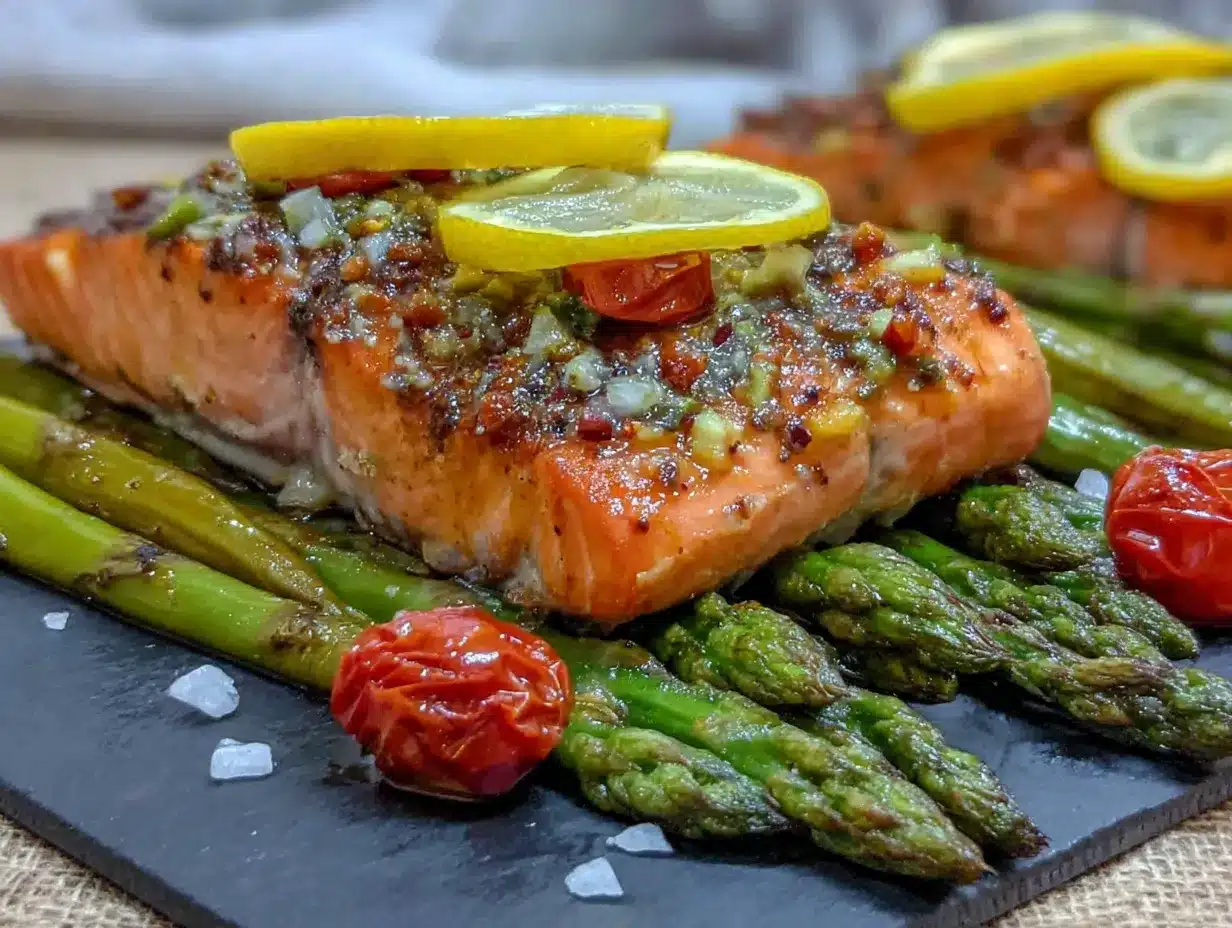
- 1 pound fresh asparagus: Look for spears that are bright green with firm tips. Thicker spears hold up better during roasting. Snap off the woody ends—they’ll naturally break where the tender part begins.
- 2 tablespoons olive oil: Enough to coat the asparagus without making them greasy.
- ½ teaspoon kosher salt: Season generously—asparagus needs salt to bring out its natural sweetness.
- ¼ teaspoon black pepper: Just a touch for balance.
- 2 tablespoons fresh parsley, chopped (optional): For garnish and a fresh finish.
Substitution Notes
If you’re dairy-free, this recipe is naturally dairy-free as written. For a lower-carb option, replace the asparagus with broccoli florets or green beans—just adjust the roasting time slightly. I’ve also made this with arctic char instead of salmon, and it works beautifully. Just reduce the cooking time by a few minutes since char is typically thinner.
Equipment Needed
One of the best things about this recipe is how little equipment it requires. Here’s what you’ll need:
- Large rimmed baking sheet (18×13 inches): This is your star player. A rimmed sheet prevents juices from spilling into your oven. I use a Nordic Ware brand sheet pan that I’ve had for years, and it’s never let me down. If you don’t have a large sheet, use two smaller ones—just rotate them halfway through cooking.
- Parchment paper or aluminum foil: Line your pan for easier cleanup. Parchment paper is my preference because nothing sticks to it, and it doesn’t react with the lemon juice.
- Chef’s knife and cutting board: For mincing garlic and trimming asparagus.
- Small bowl: For mixing the seasoning paste for the salmon.
- Measuring spoons: For accuracy with your seasonings.
- Instant-read thermometer (optional but recommended): Takes the guesswork out of cooking salmon to perfection. I like the Thermapen brand, but any reliable digital thermometer works.
Don’t have parchment paper? No worries. Just grease your pan lightly with olive oil. The salmon might stick a tiny bit, but a gentle nudge with a spatula usually does the trick. And if you don’t have an instant-read thermometer, you can check doneness by gently pressing the top of the salmon—it should flake easily with a fork when done.
Preparation Method
Let me walk you through this step by step. I’ve made this recipe dozens of times, and these are the exact steps that give you the best results every single time.
- Preheat your oven to 400°F (200°C). This is important—you want the oven fully hot before the salmon goes in. Give it a full 15 minutes to preheat. While it’s heating, position your rack in the center of the oven.
- Prepare your baking sheet. Line your rimmed baking sheet with parchment paper or aluminum foil. If using foil, lightly spray it with cooking spray to prevent sticking. Set the sheet aside for now.
- Prep the asparagus. Rinse your asparagus spears under cold water and pat them dry. Working with one spear at a time, gently bend the bottom end until it snaps—this is where the woody part ends and the tender part begins. Discard the tough ends. Place the trimmed spears in a large bowl.
- Season the asparagus. Drizzle 2 tablespoons of olive oil over the asparagus, then sprinkle with ½ teaspoon kosher salt and ¼ teaspoon black pepper. Toss everything together with your hands until each spear is lightly coated. Spread the asparagus in a single layer on one half of your prepared baking sheet. Don’t overcrowd them—they need space to roast, not steam.
- Make the salmon seasoning. In a small bowl, combine 3 tablespoons olive oil, the minced garlic, 1 teaspoon kosher salt, ½ teaspoon black pepper, 1 teaspoon dried dill, and 1 teaspoon paprika. Stir until it forms a fragrant paste. This mixture is what gives the salmon its beautiful crust and flavor.
- Season the salmon. Pat your salmon fillets dry with paper towels—this is crucial for getting that nice sear-like exterior. Place the fillets on the empty half of your baking sheet, skin-side down if they have skin. Using a spoon or your fingers, spread the seasoning mixture evenly over the tops of each fillet. Don’t be shy—really coat them well.
- Add the lemon slices. Arrange your lemon slices on top of the seasoned salmon fillets. Tuck a slice or two under each fillet if you want extra lemon flavor. The lemon does double duty here—it infuses the fish while keeping it moist during roasting.
- Roast everything together. Place the baking sheet in your preheated oven on the center rack. Roast for 12-15 minutes, depending on the thickness of your salmon. For fillets that are about 1 inch thick, 13 minutes is usually perfect. The asparagus should be tender-crisp with slightly charred edges, and the salmon should flake easily with a fork.
- Check for doneness. If you’re using an instant-read thermometer, insert it into the thickest part of the salmon. You’re looking for 125°F (52°C) for medium-rare or 130°F (54°C) for medium. Remember that the salmon will continue cooking slightly after you remove it from the oven.
- Rest and serve. Remove the sheet pan from the oven and let it rest for 2-3 minutes. This allows the juices to redistribute throughout the salmon. Sprinkle the chopped fresh parsley over everything for a fresh finish. Serve immediately, with lemon wedges on the side if you want extra brightness.
One thing I learned the hard way—don’t walk away during the last few minutes of cooking. Ovens vary, and that difference between perfectly cooked and slightly overdone can happen fast. I once got distracted by a phone call and ended up with salmon that was edible but dry. Now I set a timer and stay nearby.
Cooking Tips & Techniques
After making this recipe more times than I can count, I’ve picked up a few tricks that make a real difference. Here are the things I wish someone had told me from the start.
Pat your salmon dry. This is non-negotiable. Moisture is the enemy of browning. If your salmon is wet, the seasoning won’t stick properly, and you’ll end up with steamed fish instead of beautifully roasted salmon. Take a few extra seconds to really blot those fillets dry.
Don’t crowd the pan. I know it’s tempting to cram everything onto one sheet pan to save time, but overcrowding leads to steaming instead of roasting. Your asparagus needs space between spears to develop those lovely charred edges. If your salmon fillets are touching, they won’t brown evenly. Use two pans if you need to—it’s worth the extra minute of cleanup.
Watch your oven temperature. I learned this one through a few disappointing batches. Ovens run hot or cold, and 400°F in one oven might be 375°F in another. If your salmon consistently comes out undercooked, bump the temperature up by 25 degrees next time. If it’s drying out, lower it slightly. Trust your eyes and your thermometer more than the recipe.
Use thick asparagus spears. Thin asparagus spears can become mushy during roasting. Look for spears that are about pencil-thickness or slightly thicker. They hold their shape better and develop a nicer texture. If you only have thin asparagus, reduce the roasting time by 2-3 minutes.
Let it rest. I know you’re hungry, but those 2-3 minutes of resting time make a real difference. The salmon’s juices need a moment to settle back into the flesh. If you cut into it immediately, those juices run out onto the pan, leaving you with drier fish. Patience pays off here.
Variations & Adaptations
One of the things I love about this recipe is how adaptable it is. Here are some variations I’ve tried and loved.
Mediterranean twist: Swap the dill for dried oregano and add a handful of cherry tomatoes to the pan alongside the asparagus. The tomatoes burst during roasting and create a little sauce that’s incredible with the salmon. I also like to sprinkle crumbled feta cheese over everything right before serving.
Spicy version: Add ½ teaspoon of red pepper flakes to the seasoning mixture, or use cayenne pepper instead of paprika. The heat pairs beautifully with the lemon and dill. My husband loves this version, and I’ll admit it’s become my second favorite way to make it.
Garlic butter version: If you’re not dairy-free, melt 2 tablespoons of butter with the olive oil in the seasoning mixture. Brush it over the salmon before roasting. The butter adds incredible richness and helps the salmon develop a gorgeous golden crust. Just watch the cooking time—butter can burn faster than oil.
Vegetable swap: Not an asparagus fan? No problem. Broccoli florets, green beans, or zucchini slices all work beautifully. Just adjust the roasting time based on your chosen vegetable. Broccoli needs about 15 minutes, green beans need 12, and zucchini needs about 10. Cut them into similar sizes so they cook evenly.
Lemon herb variation: Replace the dried dill with a mix of dried thyme, rosemary, and parsley. Add an extra clove of garlic for good measure. This version has a more robust, almost Mediterranean flavor profile that’s lovely with a side of couscous or quinoa.
Serving & Storage Suggestions
This sheet pan dinner is beautiful as-is, but here are my favorite ways to serve and store it.
Serving suggestions: I love serving this with a simple side of quinoa or brown rice to soak up any juices from the pan. A crusty baguette is also wonderful for the same reason. If I’m feeling fancy, I’ll add a simple green salad with lemon vinaigrette on the side. The freshness of the salad balances the richness of the salmon perfectly.
Temperature matters: Serve this warm, right after resting. The salmon is at its best when it’s still slightly warm, and the asparagus has that perfect tender-crisp texture. Leftovers are good, but nothing beats that first serving fresh from the oven.
Storage instructions: If you have leftovers, store the salmon and asparagus together in an airtight container in the refrigerator. They’ll keep for up to 3 days. I recommend separating the lemon slices before storing—they can make the salmon slightly bitter if left on overnight.
Reheating tips: The best way to reheat this is in a 300°F oven for about 5-7 minutes. This gently warms the salmon without drying it out. The microwave works in a pinch, but it tends to overcook the fish and make the asparagus limp. If you’re in a hurry, flake the cold salmon over a salad for an easy lunch the next day.
How flavors develop: Honestly, this is one of those rare recipes where the leftovers are almost as good as the fresh version. The flavors meld together overnight, and the salmon takes on an even more pronounced dill and lemon taste. I’ve been known to make extra on purpose just for next-day lunches.
Nutritional Information & Benefits
This recipe isn’t just delicious—it’s genuinely good for you too. Here’s what you’re getting in each serving.
| Nutrient | Amount Per Serving |
|---|---|
| Calories | 385 |
| Protein | 35g |
| Fat | 22g |
| Carbohydrates | 8g |
| Fiber | 3g |
| Sugar | 3g |
| Sodium | 680mg |
| Vitamin D | 15mcg |
| Calcium | 60mg |
| Iron | 3mg |
Salmon is packed with omega-3 fatty acids, which support heart health and brain function. It’s also one of the best natural sources of vitamin D. Asparagus brings fiber, folate, and vitamins A, C, and K to the table. Together, they make a meal that’s as nourishing as it is satisfying. This recipe is naturally gluten-free, dairy-free, and low-carb, making it suitable for a wide range of dietary needs.
I love knowing that I’m feeding my body well when I make this dinner. It’s the kind of meal that leaves you feeling energized rather than weighed down—perfect for those evenings when you want to eat something delicious without compromising on health.
Conclusion
This light and easy salmon sheet pan dinner with asparagus has become a staple in my kitchen for good reason. It’s simple enough for a busy Tuesday night but impressive enough to serve to company. The ingredients are straightforward, the technique is forgiving, and the results are consistently delicious. Every time I make it, I think about Maria knocking on my door with that warm sheet pan, and I feel grateful for that small moment of neighborly kindness that changed my cooking forever.
I encourage you to make this recipe your own. Adjust the seasonings to match your preferences, swap in whatever vegetables you have on hand, and don’t be afraid to experiment. Cooking should feel playful, not stressful. This recipe is a wonderful starting point for building confidence in the kitchen.
I’d love to hear how it turns out for you. Did you try a variation? Discover a new favorite seasoning combination? Drop a comment below and share your experience. And if you loved this recipe, consider sharing it with a friend who could use an easy, nourishing dinner in their rotation. Happy cooking, friends—you’ve got this!
Frequently Asked Questions
Can I use frozen salmon for this recipe?
Yes, you can use frozen salmon, but I recommend thawing it completely in the refrigerator overnight before cooking. Frozen salmon releases more water as it cooks, which can prevent that nice browned exterior. Pat it extra dry after thawing to get the best results.
How do I know when the salmon is done without a thermometer?
Without a thermometer, look for visual cues. The salmon should be opaque all the way through and flake easily when gently pressed with a fork. The flesh should separate into clean flakes, not look translucent or mushy in the center. For most 1-inch thick fillets, 12-14 minutes at 400°F does the trick.
Can I prepare this recipe ahead of time?
You can prep the ingredients ahead, but I don’t recommend assembling the full dish until you’re ready to cook. The salt in the seasoning can start to cure the salmon if it sits too long, changing its texture. Instead, trim your asparagus and make the seasoning paste up to a day ahead, then assemble and roast when you’re ready.
What if I don’t have fresh asparagus?
Frozen asparagus works in a pinch, but the texture won’t be quite as good. Thaw it first and pat it very dry to remove excess moisture. You’ll also want to reduce the roasting time by about 5 minutes since frozen asparagus cooks faster. Broccoli or green beans are excellent substitutes if fresh asparagus isn’t available.
Can I use skin-on salmon for this recipe?
Absolutely. Skin-on salmon works beautifully here. Just place the fillets skin-side down on the pan. The skin becomes crispy during roasting and helps keep the fish moist. If you don’t like eating the skin, it peels off easily after cooking. Just be aware that the skin can stick to parchment paper, so a quick spray of cooking oil on the paper helps prevent that.
Pin This Recipe!
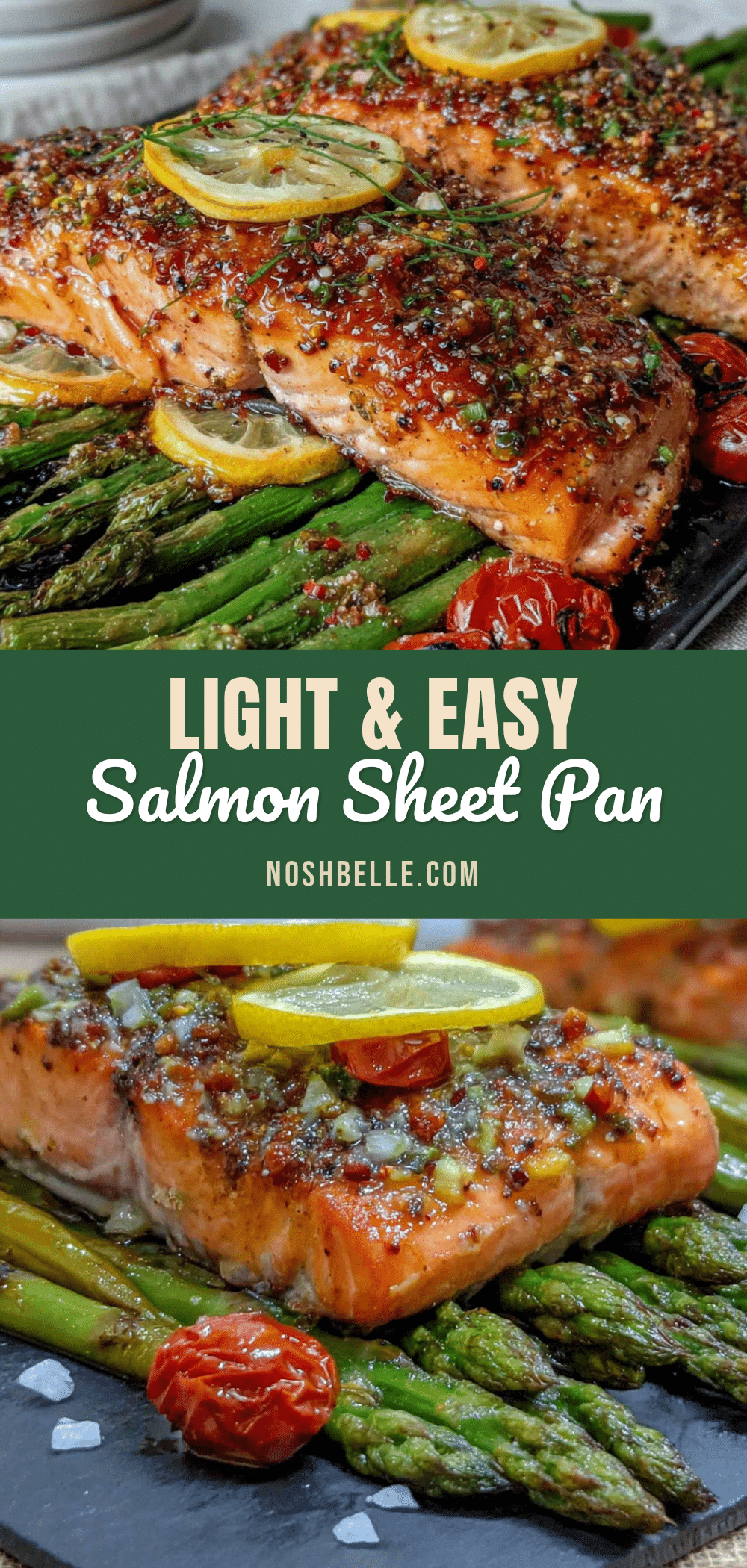
Easy Light Salmon Sheet Pan Dinner with Asparagus

A quick and easy sheet pan dinner featuring perfectly flaky salmon and tender, caramelized asparagus, all roasted together on one pan for minimal cleanup and maximum flavor.
- Prep Time: 10 minutes
- Cook Time: 15 minutes
- Total Time: 25 minutes
- Yield: 4 servings 1x
- Category: Main Course
- Cuisine: American
Ingredients
- 4 salmon fillets (6 ounces each)
- 3 tablespoons olive oil
- 2 cloves garlic, minced
- 1 teaspoon kosher salt
- ½ teaspoon black pepper
- 1 teaspoon dried dill
- 1 teaspoon paprika
- 1 lemon, thinly sliced
- 1 pound fresh asparagus
- 2 tablespoons olive oil
- ½ teaspoon kosher salt
- ¼ teaspoon black pepper
- 2 tablespoons fresh parsley, chopped (optional)
Instructions
- Preheat your oven to 400°F (200°C). Position the rack in the center of the oven.
- Line a large rimmed baking sheet with parchment paper or aluminum foil.
- Rinse asparagus spears, pat dry, and snap off woody ends. Place in a large bowl.
- Drizzle 2 tablespoons olive oil over asparagus, sprinkle with ½ teaspoon kosher salt and ¼ teaspoon black pepper. Toss to coat. Spread in a single layer on one half of the prepared baking sheet.
- In a small bowl, combine 3 tablespoons olive oil, minced garlic, 1 teaspoon kosher salt, ½ teaspoon black pepper, 1 teaspoon dried dill, and 1 teaspoon paprika. Stir into a paste.
- Pat salmon fillets dry with paper towels. Place on the empty half of the baking sheet, skin-side down. Spread seasoning mixture evenly over the tops of each fillet.
- Arrange lemon slices on top of the seasoned salmon fillets.
- Roast for 12-15 minutes, depending on thickness. For 1-inch thick fillets, 13 minutes is usually perfect. Asparagus should be tender-crisp with slightly charred edges, and salmon should flake easily with a fork.
- If using an instant-read thermometer, insert into the thickest part of the salmon. Aim for 125°F (52°C) for medium-rare or 130°F (54°C) for medium.
- Remove from oven and let rest for 2-3 minutes. Sprinkle with chopped fresh parsley. Serve immediately.
Notes
Pat salmon dry for best browning. Don’t crowd the pan; use two pans if needed. Oven temperatures vary; adjust as needed. Let salmon rest before serving. Leftovers keep for up to 3 days in the refrigerator.
Nutrition
- Serving Size: 1 serving
- Calories: 385
- Sugar: 3
- Sodium: 680
- Fat: 22
- Saturated Fat: 3
- Carbohydrates: 8
- Fiber: 3
- Protein: 35
Keywords: salmon, sheet pan dinner, asparagus, easy dinner, healthy, weeknight dinner, gluten-free, dairy-free