The woman at the next stall watched me fumbling with a bag of ground beef that had just split open. I was at the Saturday farmers’ market, trying to hold three bags of produce, a bouquet of basil, and now a leaking package of meat. She didn’t say anything at first. Then she reached over, pulled a spare canvas tote from her own cart, and held it out. “You need this more than I do,” she said with a small laugh. Her name was Ruth, and she was in her seventies with the kind of capable hands that had clearly spent decades in a kitchen. We got to talking, and somehow—between me thanking her profusely and her waving it off—the conversation turned to meatloaf. She told me her secret was never, ever skipping the glaze, and that the glaze had to have brown sugar. Not honey, not maple syrup. Brown sugar, period. I went home that afternoon with a new tote bag and a recipe scribbled on the back of a receipt. Honestly, I thought I knew meatloaf. But Ruth’s version, with that sticky-sweet top, changed everything. It’s the one I’ve been making ever since, and let me tell you—once you try it, you won’t go back. Maybe you’ve been there, thinking you’ve nailed a recipe, only to have a stranger show you a better way. That was my Tuesday, and it turned into my go-to dinner.
Why You’ll Love This Recipe
This isn’t just another meatloaf. This is the one that gets requested for birthdays, the one that disappears before the green beans are even passed around. I’ve tested this recipe at least a dozen times, tweaking the ratios, swapping in different binders, and adjusting the glaze until it hit that perfect balance of savory and sweet. It’s been family-approved, neighbor-approved, and even picky-eater-approved. Here is why it stands out:
- Quick & Easy: Comes together in under 15 minutes of active prep. The oven does the rest of the work.
- Simple Ingredients: You likely have everything in your kitchen right now. No fancy grocery trips required.
- Perfect for Weeknights or Sundays: It feels like a comfort-food hug but doesn’t keep you in the kitchen all day.
- Crowd-Pleaser: Kids love the sweet glaze, adults love the savory meat. It’s a win-win.
- Unbelievably Delicious: The texture is tender but holds its shape, and that brown sugar glaze? It caramelizes into a sticky, tangy crust that is pure magic.
What makes this different from other meatloaf recipes is a small but mighty trick: I use a panade (a mixture of milk and breadcrumbs) instead of just dry breadcrumbs. This keeps the meatloaf incredibly moist without being mushy. Plus, the brown sugar glaze isn’t just brushed on top—it’s layered halfway through baking so it seeps into the edges. It’s comfort food reimagined, honestly. It’s the kind of meal that makes you close your eyes after the first bite, and it’s perfect for impressing guests without any stress.
What Ingredients You Will Need
This recipe uses simple, wholesome ingredients to deliver bold flavor and satisfying texture without the fuss. Most of these are pantry staples, which makes this an easy last-minute dinner choice.
- Ground beef: 2 lbs (900g), 80/20 blend preferred. The fat keeps it juicy. I personally use 80/20 from a local butcher when I can, but store-bought works great too.
- Breadcrumbs: 1 cup (120g), plain or Italian-style. Panko works well here, too.
- Milk: ½ cup (120 ml), whole milk preferred, but 2% works fine. This creates the panade that keeps the meatloaf tender.
- Eggs: 2 large, lightly beaten. They bind everything together.
- Onion: 1 medium, finely diced (about 1 cup). Yellow or white onion works best. Sauté it first if you want a milder flavor.
- Garlic: 3 cloves, minced. Fresh garlic is best here; don’t use the jarred stuff.
- Worcestershire sauce: 2 tablespoons. Adds that deep, umami kick.
- Ketchup: ½ cup (120 ml) for the meat mixture, plus more for the glaze.
- Brown sugar: ½ cup (100g), packed. Light or dark brown sugar both work. Dark gives a deeper molasses flavor.
- Dijon mustard: 1 tablespoon. Adds a subtle tang that balances the sweetness.
- Salt: 1 teaspoon.
- Black pepper: ½ teaspoon, freshly ground.
- Dried thyme: 1 teaspoon. Optional, but I love the earthy note it adds.
- Fresh parsley: 2 tablespoons, chopped, for garnish (optional).
For the glaze, you’ll need an extra ½ cup of ketchup and ¼ cup of brown sugar. I recommend using a brand like Heinz for the ketchup—its consistency is perfect for the glaze. If you’re out of fresh garlic, you can use 1 teaspoon of garlic powder, but fresh really does make a difference here. For a gluten-free option, use gluten-free breadcrumbs or crushed pork rinds.
Equipment Needed
You don’t need a lot of fancy tools for this recipe, which is part of its charm. Here is what you’ll need:
- Large mixing bowl: For combining all the meatloaf ingredients. A glass or stainless steel bowl works best.
- Loaf pan: A standard 9×5-inch loaf pan. I prefer a metal one because it conducts heat better, but glass works too. If you don’t have a loaf pan, you can shape the meatloaf free-form on a lined baking sheet.
- Baking sheet: Place the loaf pan on a baking sheet to catch any drips. Trust me, the glaze will bubble over.
- Parchment paper or aluminum foil: For easy cleanup. Line the loaf pan with parchment paper with overhanging edges for easy lifting.
- Small saucepan: For making the glaze. A 1-quart saucepan is perfect.
- Whisk: For combining the glaze ingredients smoothly.
- Chef’s knife and cutting board: For dicing the onion and mincing the garlic.
- Measuring cups and spoons: For accuracy. Baking is a science, even for meatloaf.
I once made this without a loaf pan and just shaped it into a free-form loaf on a baking sheet. It worked perfectly—the edges got extra caramelized, which was actually a bonus. If you’re on a budget, skip the parchment paper and just grease the pan well. The meatloaf will release just fine with a little patience.
Preparation Method
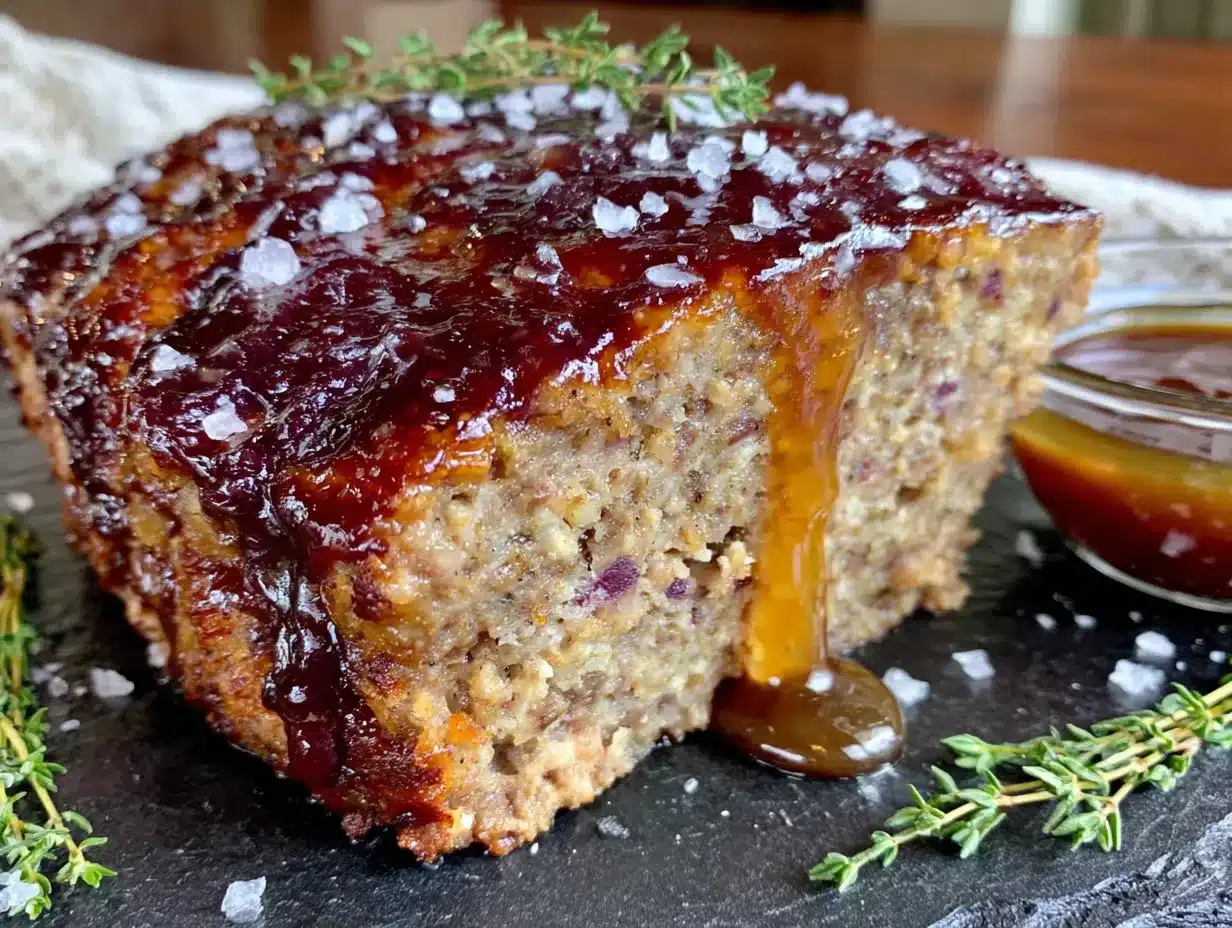
This recipe comes together in a few simple steps. Follow these closely for the best results.
- Preheat your oven to 350°F (175°C). Position the rack in the center of the oven. While it’s heating, line your loaf pan with parchment paper, leaving some overhang on the long sides.
- Make the panade: In a small bowl, combine the breadcrumbs and milk. Stir and let it sit for 5 minutes. The breadcrumbs will absorb the milk and become a paste. This is the secret to a tender meatloaf—don’t skip this step.
- Sauté the aromatics: In a small skillet over medium heat, add a drizzle of oil. Cook the diced onion for 3-4 minutes until translucent. Add the minced garlic and cook for 30 seconds more until fragrant. Remove from heat and let it cool slightly. This step softens the onion and mellows the garlic so they melt into the meatloaf without any harsh raw bites.
- Mix the meatloaf: In a large mixing bowl, combine the ground beef, panade, sautéed onion and garlic, beaten eggs, Worcestershire sauce, ½ cup of ketchup, Dijon mustard, salt, pepper, and dried thyme. Use your hands to mix gently. Do not overmix—just until everything is combined. Overworking the meat will make it tough. You should see small flecks of onion and herbs throughout.
- Shape the loaf: Transfer the meat mixture to the prepared loaf pan. Press it gently into an even shape, making sure there are no air pockets. Don’t pack it down too firmly; you want a light hand here.
- Make the glaze: In a small saucepan over medium heat, combine ½ cup of ketchup and ¼ cup of packed brown sugar. Whisk until the sugar dissolves and the mixture is smooth, about 2 minutes. Remove from heat. The glaze should be thick but pourable.
- First bake: Place the loaf pan on a baking sheet (to catch drips) and bake for 30 minutes. The meatloaf will be partially cooked but still pale on top.
- Apply the glaze: Remove the meatloaf from the oven. Spoon or brush about half of the glaze over the top, spreading it evenly. Return to the oven and bake for another 20 minutes.
- Second glaze: Apply the remaining glaze and bake for an additional 10-15 minutes, or until the internal temperature reaches 160°F (71°C). The glaze will be sticky and caramelized.
- Rest and serve: Remove the meatloaf from the oven and let it rest in the pan for 10 minutes. This is crucial—it allows the juices to redistribute. Then, using the parchment overhang, lift the meatloaf out of the pan. Slice and serve warm.
Sensory cues: At step 4, the mixture should feel moist but not wet. It should hold together when you press it. At step 9, the glaze should be bubbling and darkening at the edges. The kitchen will smell sweet and savory—that’s how you know it’s working. If the glaze starts to burn around the edges, tent the loaf pan loosely with foil for the last 10 minutes.
Cooking Tips & Techniques
I’ve made this recipe more times than I can count, and I’ve learned a few things the hard way. Here are my best tips:
Don’t skip the panade. I once tried to save time by just tossing dry breadcrumbs into the meat. The result was a dry, crumbly meatloaf that fell apart on the plate. The panade (milk-soaked breadcrumbs) acts as a moisture reservoir. It’s a simple trick that professional chefs use, and it makes all the difference.
Use a meat thermometer. I know, I know—it feels fussy. But ground beef needs to reach 160°F (71°C) to be safe, and guessing by color or time alone can lead to overcooked, dry meatloaf. Insert the thermometer into the center of the loaf. When it hits 160°F, it’s done. No more, no less.
Let it rest. This was a hard lesson for me. I used to slice into meatloaf immediately, eager to serve. The slices would crumble and fall apart, and the juices would run all over the cutting board. Letting it rest for 10 minutes allows the proteins to relax and the juices to redistribute. The slices will be clean and the meatloaf will hold together beautifully.
Don’t overmix. I once got distracted and mixed the meatloaf for a full minute. It came out dense and tough, like a hockey puck. Mix just until the ingredients are combined. If you see streaks of egg or breadcrumbs, that’s okay—they’ll incorporate as you shape the loaf.
Line the pan. Parchment paper with overhang makes lifting the meatloaf out effortless. No scraping, no broken edges. It’s a small step that saves a lot of frustration.
Variations & Adaptations
This recipe is flexible, and I’ve tried several variations over the years. Here are some of my favorites:
Turkey Meatloaf: Swap the ground beef for ground turkey (93/7 lean-to-fat ratio). Add 2 tablespoons of olive oil to the mixture to keep it moist, since turkey is leaner. The cooking time stays the same. I’ve made this for friends who don’t eat red meat, and they loved it.
Cheesy Stuffed Meatloaf: After shaping the loaf in the pan, make a shallow trench down the center. Fill it with ½ cup of shredded cheddar or mozzarella, then pinch the meat over the top to seal. The cheese melts into the center, creating a gooey surprise. I tried this on a whim one Sunday, and my family demanded it ever since.
Spicy Kick: Add 1 tablespoon of sriracha or ½ teaspoon of cayenne pepper to the meat mixture. For the glaze, stir in 1 teaspoon of chili flakes. This gives the meatloaf a nice warmth without overwhelming the other flavors. Perfect for those who like a little heat.
Gluten-Free: Use gluten-free breadcrumbs or crushed pork rinds instead of regular breadcrumbs. The pork rinds add a subtle savory flavor. I’ve tested this with a gluten-free friend, and she couldn’t tell the difference.
BBQ Twist: Replace the ketchup in the glaze with your favorite barbecue sauce. Use the same amount (½ cup) and add 2 tablespoons of brown sugar. This gives the meatloaf a smoky, tangy flavor that’s perfect for summer cookouts.
Serving & Storage Suggestions
This meatloaf is best served warm, right after resting. Slice it into 1-inch thick pieces and arrange on a platter. The caramelized glaze on top is the star, so make sure each slice gets a good amount. I like to serve it with mashed potatoes and green beans—the creamy potatoes soak up any extra glaze on the plate. A simple side salad with a tangy vinaigrette also works well to cut through the richness.
For beverages, a glass of red wine like a Zinfandel or a cold beer pairs beautifully. For a non-alcoholic option, iced tea with a squeeze of lemon is refreshing.
Storage: Leftover meatloaf can be stored in an airtight container in the refrigerator for up to 4 days. The flavors actually deepen overnight, so leftovers are often even better. To reheat, place slices in a 350°F (175°C) oven for 10-15 minutes, or until warmed through. You can also microwave individual slices on a plate covered with a damp paper towel for 1-2 minutes—this prevents them from drying out.
Freezing: You can freeze the whole meatloaf (baked or unbaked). To freeze unbaked, shape the meatloaf in the pan, wrap tightly in plastic wrap, then foil, and freeze for up to 3 months. Thaw overnight in the refrigerator before baking. To freeze baked meatloaf, let it cool completely, then wrap tightly and freeze. Reheat from frozen in a 350°F (175°C) oven for about 30 minutes.
I’ve found that meatloaf sandwiches are a fantastic way to use leftovers. Slice the cold meatloaf, toast some bread, and layer with a smear of extra glaze or some mayo. It’s a lunch that feels like a treat.
Nutritional Information & Benefits
Per serving (based on 8 servings): approximately 380 calories, 22g protein, 28g carbohydrates, 18g fat, 100mg cholesterol, 680mg sodium. These values are estimates and will vary based on the specific ingredients you use.
This recipe provides a good source of protein from the beef, which is essential for muscle repair and satiety. The onions and garlic offer antioxidants and anti-inflammatory compounds. The brown sugar glaze, while sweet, is used in moderation and adds a touch of comfort. If you’re watching your sodium, you can reduce the salt to ½ teaspoon and use low-sodium ketchup.
For those with dietary concerns, this recipe can be adapted: use ground turkey for a lower-fat option, gluten-free breadcrumbs for a gluten-free version, or reduce the brown sugar for a lower-sugar glaze. Always check labels for allergens if serving a crowd.
I personally love that this meal feels indulgent but is made from real, whole ingredients. It’s the kind of dinner that fills you up without weighing you down, and I feel good serving it to my family.
Conclusion
This classic meatloaf with brown sugar glaze is more than just a recipe—it’s a reminder that the best dishes often come from unexpected conversations. Ruth’s tip about the glaze changed everything for me, and I hope it does the same for you. It’s easy, forgiving, and endlessly customizable. Whether you stick with the classic version or try one of the variations, I promise this will become a staple in your kitchen.
I’d love to hear how it turns out for you. Did you add your own twist? Did your kids ask for seconds? Drop a comment below and let me know. And if you share a photo on social media, tag me—I love seeing your creations. Happy cooking, friends. You’ve got this.
Frequently Asked Questions
Can I make this meatloaf ahead of time?
Yes, absolutely. You can prepare the meatloaf mixture, shape it in the pan, and refrigerate it (unbaked) for up to 24 hours. When you’re ready to bake, add about 10-15 minutes to the cooking time since it’s starting from cold.
Why did my meatloaf turn out dry?
The most common reason is overcooking. Use a meat thermometer to ensure it reaches exactly 160°F (71°C) and no more. Also, make sure you’re using 80/20 ground beef—leaner blends like 90/10 can dry out easily. The panade also helps, so don’t skip it.
Can I use ground pork or a mix of meats?
Definitely. A mix of ground beef and ground pork (1 lb each) adds extra flavor and moisture. Ground veal also works. Just make sure the internal temperature still reaches 160°F (71°C).
How do I prevent the glaze from burning?
If you notice the glaze darkening too quickly or burning at the edges, tent the loaf pan loosely with aluminum foil for the last 10-15 minutes of baking. This will protect the glaze while the meatloaf finishes cooking.
Can I make this in a slow cooker?
Yes, you can. Shape the meatloaf to fit your slow cooker, place it on a foil sling for easy removal, and cook on low for 4-5 hours or on high for 2-3 hours. Apply the glaze in the last 30 minutes of cooking. The texture will be softer and more like a pot roast, but the flavor is still fantastic.
Pin This Recipe!
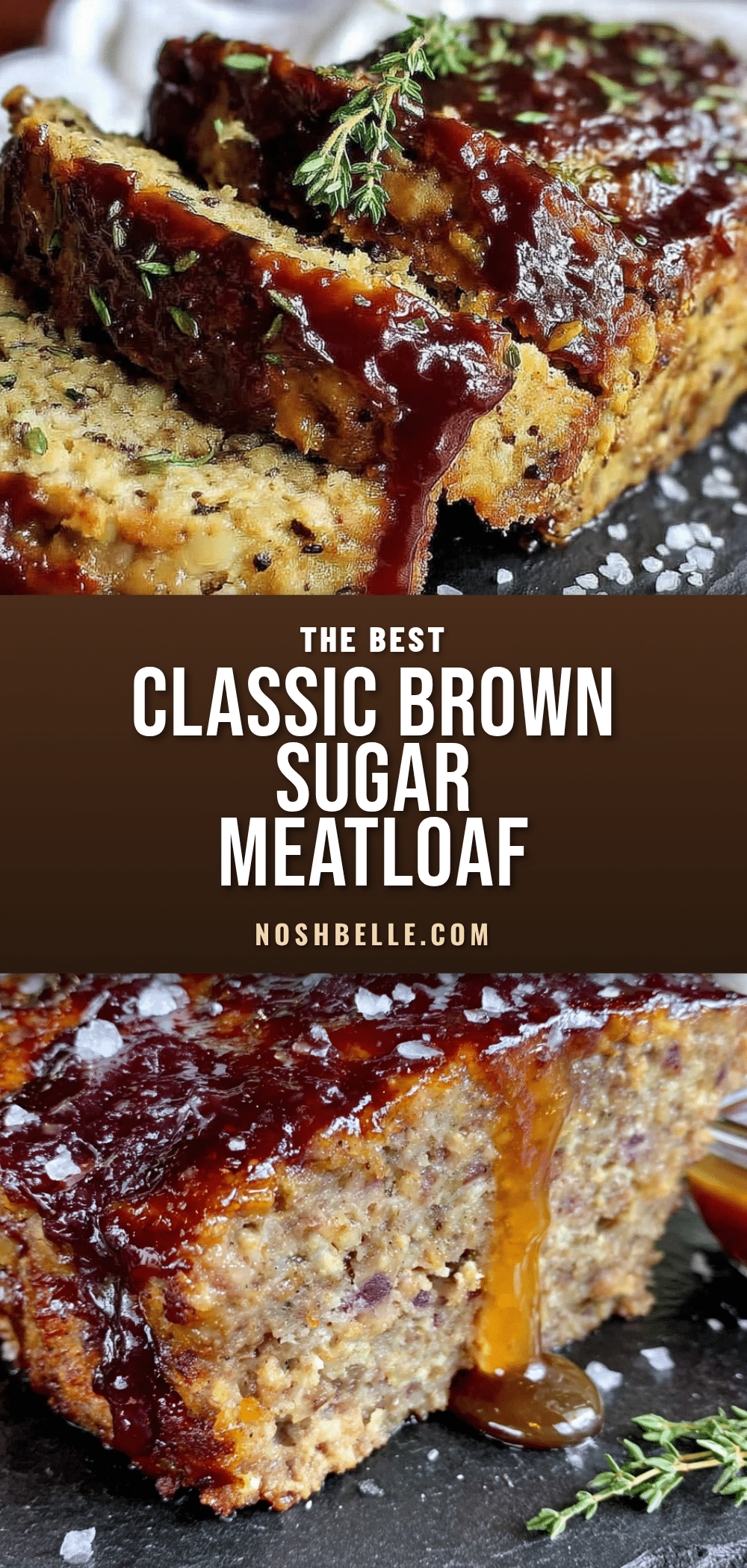
Classic Meatloaf with Brown Sugar Glaze

This classic meatloaf with a sticky-sweet brown sugar glaze is tender, savory, and incredibly moist. It’s a family-approved comfort food that’s easy to make and perfect for weeknights or Sunday dinners.
- Prep Time: 15 minutes
- Cook Time: 60 minutes
- Total Time: 75 minutes
- Yield: 8 servings 1x
- Category: Main Course
- Cuisine: American
Ingredients
- 2 lbs (900g) ground beef, 80/20 blend
- 1 cup (120g) breadcrumbs, plain or Italian-style
- ½ cup (120 ml) milk, whole milk preferred
- 2 large eggs, lightly beaten
- 1 medium onion, finely diced (about 1 cup)
- 3 cloves garlic, minced
- 2 tablespoons Worcestershire sauce
- ½ cup (120 ml) ketchup
- 1 tablespoon Dijon mustard
- 1 teaspoon salt
- ½ teaspoon black pepper, freshly ground
- 1 teaspoon dried thyme (optional)
- 2 tablespoons fresh parsley, chopped (for garnish, optional)
- For the glaze:
- ½ cup (120 ml) ketchup
- ¼ cup (50g) brown sugar, packed
Instructions
- Preheat your oven to 350°F (175°C). Position the rack in the center of the oven. Line your loaf pan with parchment paper, leaving some overhang on the long sides.
- Make the panade: In a small bowl, combine the breadcrumbs and milk. Stir and let it sit for 5 minutes until the breadcrumbs absorb the milk and become a paste.
- Sauté the aromatics: In a small skillet over medium heat, add a drizzle of oil. Cook the diced onion for 3-4 minutes until translucent. Add the minced garlic and cook for 30 seconds more until fragrant. Remove from heat and let it cool slightly.
- Mix the meatloaf: In a large mixing bowl, combine the ground beef, panade, sautéed onion and garlic, beaten eggs, Worcestershire sauce, ½ cup of ketchup, Dijon mustard, salt, pepper, and dried thyme. Use your hands to mix gently until just combined. Do not overmix.
- Shape the loaf: Transfer the meat mixture to the prepared loaf pan. Press it gently into an even shape, making sure there are no air pockets. Don’t pack it down too firmly.
- Make the glaze: In a small saucepan over medium heat, combine ½ cup of ketchup and ¼ cup of packed brown sugar. Whisk until the sugar dissolves and the mixture is smooth, about 2 minutes. Remove from heat.
- First bake: Place the loaf pan on a baking sheet and bake for 30 minutes.
- Apply the glaze: Remove the meatloaf from the oven. Spoon or brush about half of the glaze over the top, spreading it evenly. Return to the oven and bake for another 20 minutes.
- Second glaze: Apply the remaining glaze and bake for an additional 10-15 minutes, or until the internal temperature reaches 160°F (71°C).
- Rest and serve: Remove the meatloaf from the oven and let it rest in the pan for 10 minutes. Then, using the parchment overhang, lift the meatloaf out of the pan. Slice and serve warm.
Notes
Don’t skip the panade (milk-soaked breadcrumbs) as it keeps the meatloaf moist. Use a meat thermometer to ensure the internal temperature reaches 160°F (71°C). Let the meatloaf rest for 10 minutes before slicing to allow juices to redistribute. If the glaze starts to burn, tent the loaf pan loosely with foil for the last 10 minutes.
Nutrition
- Serving Size: 1 slice (1/8 of loaf
- Calories: 380
- Sugar: 16
- Sodium: 680
- Fat: 18
- Saturated Fat: 7
- Carbohydrates: 28
- Fiber: 1
- Protein: 22
Keywords: meatloaf, brown sugar glaze, classic meatloaf, comfort food, easy dinner, ground beef recipe