There used to be a tiny farm-to-table spot called The Rustic Pear tucked away on a side street in Hudson, New York, that made a butternut squash pasta that absolutely wrecked me. When they closed their doors in 2019—something about the landlord doubling the rent—I honestly felt a little lost. That pasta was my go-to comfort meal every single fall, and I knew I had to figure out how to make it myself.
After nine tries—the first one was a watery, bland disaster, let me tell you—I finally cracked the code. I stood in my kitchen on a rainy Tuesday, fork in hand, took a bite, and actually teared up a little. It was that close to the original. The secret? Roasting the squash until it caramelizes deeply, then letting a splash of good balsamic vinegar brighten everything up. Who knew?
This cozy fall harvest pasta with butternut squash and sage is everything I loved about that restaurant dish, except now I can make it in my pajamas. The sweet, nutty squash, the crispy sage leaves, the creamy sauce that coats every strand of pasta—it is pure autumn in a bowl. Maybe you have had that feeling when a dish just hits differently, like it was made for exactly the moment you are in. That is this pasta. I keep making it because it tastes like the best parts of fall, and honestly, it makes my kitchen smell like a dream.
Why You’ll Love This Recipe
This cozy fall harvest pasta with butternut squash and sage is not just another pasta recipe. It is the one you will reach for all season long, and here is why.
- Quick & Easy: Comes together in about 40 minutes, most of which is hands-off roasting time. Perfect for those busy weeknights when you still want something that feels special.
- Simple Ingredients: No fancy grocery trips needed. You likely already have pasta, olive oil, garlic, and sage in your kitchen. Just grab a butternut squash and some Parmesan, and you are set.
- Perfect for Fall Gatherings: Great for Thanksgiving sides, cozy dinner parties, or a quiet night in with a glass of wine. It fits any autumn occasion.
- Crowd-Pleaser: Every time I serve this, people ask for the recipe. Kids love the sweet squash, and adults rave about the sage butter sauce.
- Unbelievably Delicious: The combination of caramelized squash, nutty browned butter, and crispy sage is next-level comfort food. It is the kind of dish that makes you close your eyes after the first bite.
What makes this recipe different from the rest? It is all about the technique. I roast the squash until it is deeply caramelized—almost burnt at the edges—which concentrates the sweetness. Then I deglaze the pan with a splash of balsamic vinegar to add acidity that cuts through the richness. The sage gets fried in brown butter until it is shatteringly crisp. It is simple cooking, but every step has a purpose.
This recipe is not just good—it is the kind that makes you close your eyes after the first bite. It is comfort food reimagined, with the same soul-soothing satisfaction but in a bowl that feels elegant enough for company.
What Ingredients You Will Need
This cozy fall harvest pasta with butternut squash and sage uses simple, wholesome ingredients to deliver bold flavor and satisfying texture without the fuss. Most of these are pantry staples during autumn, and the few fresh items are easy to find at any grocery store.
- Butternut Squash (1 medium, about 2 pounds / 900g, peeled, seeded, and cut into ½-inch cubes): This is the star of the show. Look for squash that feels heavy for its size with a firm, unblemished skin. I prefer medium-sized squash because they tend to be sweeter. (Pro tip: Buy pre-cut cubes from the produce section to save time.)
- Short Pasta (12 ounces / 340g, such as rigatoni, penne, or fusilli): Short, ridged pasta holds onto the creamy sauce best. I personally love De Cecco or Barilla for their texture. Avoid long, thin pasta like spaghetti—the sauce will slide right off.
- Fresh Sage Leaves (15-20 leaves): Do not use dried sage here. Fresh sage has a peppery, slightly lemony flavor that mellows into something magical when fried. Look for leaves that are vibrant green without any brown spots.
- Unsalted Butter (4 tablespoons / 56g): We are browning the butter to create a nutty, rich sauce base. Unsalted butter lets you control the salt level. I recommend Kerrygold for its higher butterfat content, which browns beautifully.
- Garlic (4 cloves, thinly sliced): Adds a gentle warmth that complements the squash and sage. Thin slices infuse the oil without burning, unlike minced garlic which can scorch.
- Shallot (1 medium, finely diced): Milder than onion, shallot adds a subtle sweetness that blends into the background. (Substitute with ¼ cup diced yellow onion if needed.)
- Chicken or Vegetable Broth (½ cup / 120ml): This deglazes the pan and helps create a silky sauce. Use low-sodium broth so you can control the salt. Vegetable broth works perfectly for a vegetarian version.
- Heavy Cream (¼ cup / 60ml): Adds richness without making the sauce heavy. You can substitute with full-fat coconut milk for a dairy-free option, though the flavor will change slightly.
- Grated Parmesan Cheese (½ cup / 50g, plus more for serving): Adds salty, umami depth. Buy a block and grate it yourself—pre-shredded cheese has anti-caking agents that prevent smooth melting. I love Parmigiano-Reggiano for the best flavor.
- Balsamic Vinegar (1 tablespoon / 15ml): This is my secret ingredient. A splash brightens the roasted squash and cuts through the richness of the butter and cream. Use a good quality balsamic—not the super thick glaze, just regular aged vinegar.
- Olive Oil (2 tablespoons / 30ml): For roasting the squash. Extra-virgin olive oil adds flavor, but regular olive oil works fine.
- Salt and Black Pepper (to taste): I use kosher salt for roasting and fine sea salt for finishing. Freshly cracked black pepper is non-negotiable here.
- Optional: Red Pepper Flakes (¼ teaspoon): Adds a tiny kick of heat that plays beautifully with the sweet squash. Leave it out if you prefer a milder dish.
- Optional: Toasted Pine Nuts (¼ cup / 35g): For garnish. They add a lovely crunch and nutty flavor. Toast them in a dry pan for 2-3 minutes until golden.
Equipment Needed
You do not need a ton of fancy equipment for this cozy fall harvest pasta with butternut squash and sage. Here is what you will need:
- Large Baking Sheet: A rimmed baking sheet is essential for roasting the squash without spilling. I use a half-sheet pan (18×13 inches). Line it with parchment paper for easy cleanup.
- Large Pot: For boiling the pasta. A 6-quart pot works perfectly. Make sure it is big enough so the pasta has room to move around.
- Large Skillet or Dutch Oven: A 12-inch skillet with high sides is ideal for making the sauce and tossing everything together. Cast iron or stainless steel works great. Non-stick is fine too, but you will not get as much browning on the sage.
- Chef’s Knife: A sharp 8-inch chef’s knife makes quick work of cubing the squash. (Honestly, a dull knife is more dangerous than a sharp one—I learned that the hard way.)
- Vegetable Peeler: For peeling the butternut squash. A Y-peeler is my favorite because it gives you more control.
- Cutting Board: A large wooden or plastic board for prep work.
- Wooden Spoon or Silicone Spatula: For stirring the sauce and tossing the pasta. Wooden spoons are great for scraping up browned bits from the pan.
- Microplane or Box Grater: For grating Parmesan. A microplane gives you fluffy, fine shreds that melt instantly.
- Measuring Cups and Spoons: For accuracy. I keep a set of dry measuring cups and a liquid measuring cup handy.
Budget-Friendly Tip: If you do not have a Dutch oven, any large skillet with high sides will work. You can also roast the squash on a foil-lined baking sheet if you are out of parchment paper.
Preparation Method
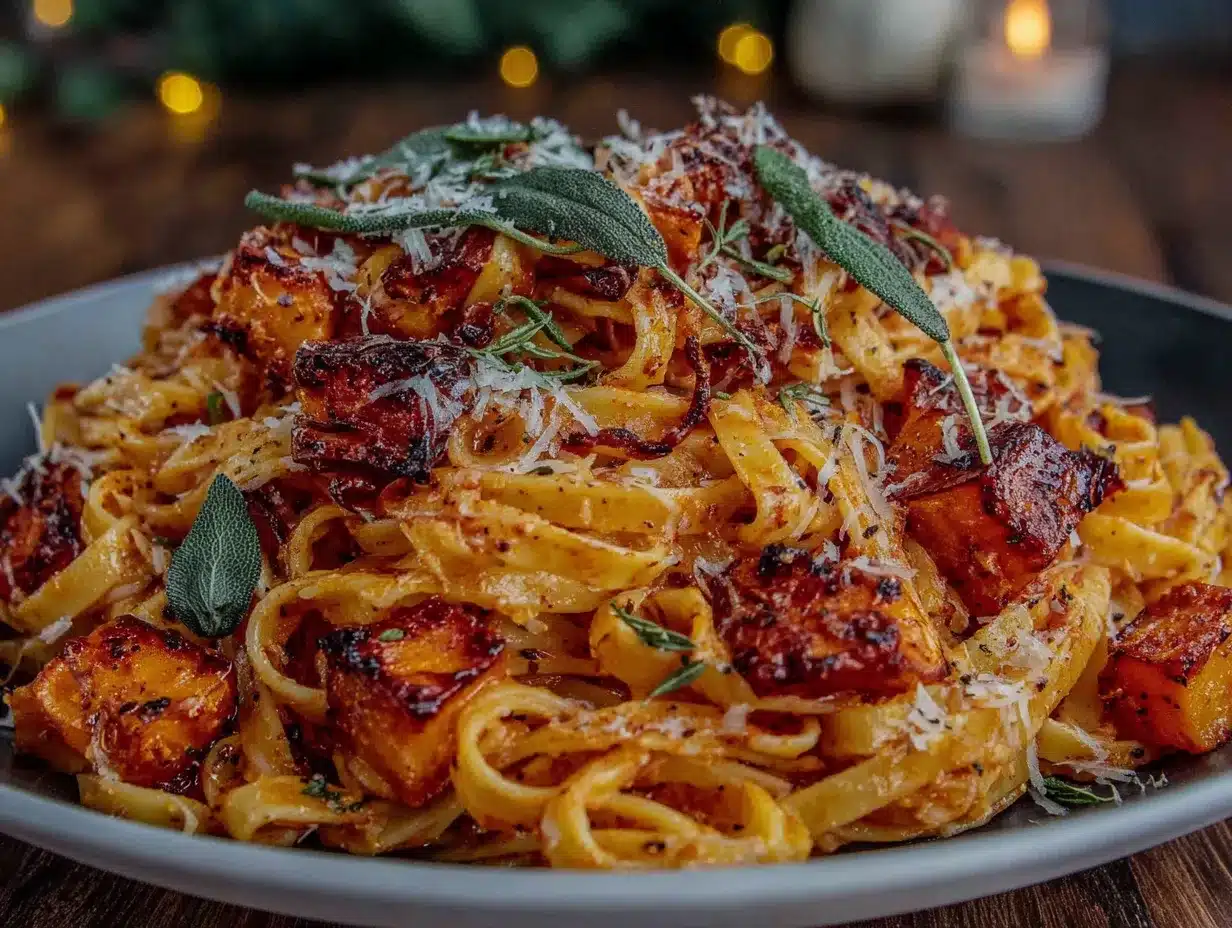
Let me walk you through this cozy fall harvest pasta with butternut squash and sage step by step. I have made this so many times that I have got the rhythm down, and I will share all my little tricks along the way.
Step 1: Roast the Butternut Squash
Preheat your oven to 425°F (220°C). While it heats up, peel your butternut squash with a vegetable peeler. Cut off the top and bottom, then slice it in half where the neck meets the bulb. Scoop out the seeds with a spoon—save them for roasting later if you are feeling ambitious. Cut the squash into ½-inch cubes. This is the most time-consuming part, but it gets easier with practice. (I once tried to skip cubing and just roasted halves—disaster. They never cooked evenly.)
Toss the cubed squash with 2 tablespoons of olive oil, ½ teaspoon of salt, and ¼ teaspoon of black pepper. Spread them in a single layer on your baking sheet. Do not overcrowd—if the cubes are touching too much, they will steam instead of caramelize. Roast for 25-30 minutes, flipping halfway through, until the edges are deeply browned and the squash is tender when pierced with a fork. The smell at this point is incredible.
Step 2: Cook the Pasta
While the squash roasts, bring a large pot of generously salted water to a rolling boil. I use about 1 tablespoon of salt per 4 quarts of water—it should taste like the sea. Add your pasta and cook according to package directions until al dente, usually 9-11 minutes for rigatoni. Reserve 1 cup of pasta water before draining. Do not skip this step—that starchy water is liquid gold for thinning out the sauce later. Drain the pasta and set it aside. Toss it with a tiny drizzle of olive oil if you are worried about sticking.
Step 3: Fry the Sage and Brown the Butter
In your large skillet or Dutch oven, melt 4 tablespoons of unsalted butter over medium heat. Once it is foaming, add the fresh sage leaves in a single layer. Cook for 1-2 minutes, flipping once, until they turn dark green and crispy. The sound of sage sizzling in butter is pure comfort. Transfer the crispy sage leaves to a paper towel-lined plate—they will crisp up further as they cool. Do not wipe out the pan; you want that brown butter goodness.
Continue cooking the butter over medium heat, swirling the pan occasionally. It will go from foamy to golden to a deep amber color with a nutty aroma. This takes about 2-3 minutes. Watch it carefully—burnt butter is bitter and you will have to start over. (I have definitely burned a batch or two while distracted by my phone. Learn from my mistakes.)
Step 4: Build the Sauce
Reduce the heat to medium-low and add the sliced garlic and diced shallot to the browned butter. Cook for 1-2 minutes until fragrant and softened, but not browned. Pour in ½ cup of chicken or vegetable broth and use a wooden spoon to scrape up any browned bits from the bottom of the pan. This is called deglazing, and it packs the sauce with flavor. Let it simmer for 1 minute until slightly reduced.
Stir in ¼ cup of heavy cream and let it bubble gently for another minute. The sauce will look thin now, but it will thicken as it coats the pasta. Add the roasted butternut squash cubes and stir to coat them in the sauce. Let everything warm through for 1-2 minutes.
Step 5: Combine Everything
Add the drained pasta to the skillet along with ½ cup of grated Parmesan cheese. Toss everything together gently with tongs or a wooden spoon. If the sauce seems too thick, add reserved pasta water a tablespoon at a time until you reach your desired consistency. I usually use about ¼ cup. The sauce should cling to the pasta without being soupy.
Drizzle 1 tablespoon of balsamic vinegar over the top and toss once more. Taste and adjust seasoning with salt and pepper. Remember that the Parmesan is salty, so go easy on the extra salt.
Step 6: Serve
Divide the pasta among warm bowls. Top with the crispy sage leaves, an extra sprinkle of Parmesan, and a pinch of red pepper flakes if you like heat. For extra crunch, add toasted pine nuts. Serve immediately while everything is hot and the sage is still crispy.
Cooking Tips & Techniques
After making this cozy fall harvest pasta with butternut squash and sage more times than I can count, I have picked up a few tricks that make a real difference.
Cube the squash evenly. This is the most important tip I can give you. If your cubes are different sizes, some will burn while others stay raw. Aim for ½-inch cubes and take your time. I use a sharp chef’s knife and cut the squash into planks first, then strips, then cubes. It feels tedious, but the payoff is worth it.
Do not skip the balsamic vinegar. I know it sounds weird in a creamy pasta, but trust me on this. The acidity cuts through the richness and brightens the whole dish. It is the same principle as adding lemon juice to a rich sauce—it wakes everything up. I once forgot to add it and the dish felt flat and heavy. Never again.
Toast the sage in batches if needed. If your skillet is small, fry the sage leaves in two batches. Overcrowding the pan will cause them to steam instead of crisp up. They should sizzle immediately when they hit the butter. If they just sit there quietly, your pan is not hot enough.
Reserve more pasta water than you think you need. I always save a full cup, even though I usually only use ¼-½ cup. It is better to have extra than to be stuck with a dry pasta. The starch in the water helps emulsify the sauce, making it silky and cohesive instead of greasy.
Warm your bowls. This is a restaurant trick that makes a difference. Pop your serving bowls in the oven at the lowest setting for 5 minutes while the pasta finishes. Cold bowls will cool down your pasta instantly, and the sauce will congeal. Warm bowls keep everything perfect until the last bite.
Season as you go. Salt the pasta water generously, season the squash before roasting, and taste the sauce before adding the pasta. Layering salt throughout the process creates depth of flavor. If you only salt at the end, the dish will taste salty on the surface but bland underneath.
Variations & Adaptations
One of the best things about this cozy fall harvest pasta with butternut squash and sage is how adaptable it is. Here are some variations I have tried and loved.
Dietary Adaptations
Vegan Version: Substitute the butter with vegan butter or olive oil, use full-fat coconut milk instead of heavy cream, and swap the Parmesan for nutritional yeast or a vegan Parmesan alternative. The coconut milk adds a subtle sweetness that works beautifully with the squash. I have made this for vegan friends and they always ask for seconds.
Gluten-Free Version: Use your favorite gluten-free pasta. I recommend brown rice pasta or chickpea pasta for the best texture. Just be careful not to overcook it—gluten-free pasta can turn mushy quickly. Cook it 1 minute less than the package directions say.
Dairy-Free Version: Use olive oil instead of butter and skip the cream and Parmesan. Toss the pasta with the roasted squash and a splash of pasta water instead. It is lighter but still delicious. Add a drizzle of high-quality olive oil at the end for richness.
Flavor Twists
Add Protein: Toss in some cooked Italian sausage, shredded rotisserie chicken, or crispy bacon. I love adding crumbled goat cheese on top for an extra tangy kick. For a vegetarian protein, try roasted chickpeas—toss them with olive oil and smoked paprika before roasting alongside the squash.
Swap the Squash: Not a fan of butternut? Use cubed sweet potato, pumpkin, or acorn squash instead. Each will bring a slightly different sweetness and texture. Sweet potatoes caramelize even faster than butternut, so check them a few minutes early.
Change the Herbs: If you cannot find fresh sage, try fresh thyme or rosemary. They have a similar earthy, woodsy vibe that pairs well with the squash. Use 1 tablespoon of fresh thyme leaves or 1 teaspoon of chopped fresh rosemary.
Seasonal Variations
Spring Version: Swap the squash for asparagus and peas, and use fresh mint instead of sage. It is a completely different dish but just as delicious.
Summer Version: Use cherry tomatoes and zucchini instead of squash, and swap the sage for basil. The balsamic vinegar will still work beautifully with the tomatoes.
Serving & Storage Suggestions
This cozy fall harvest pasta with butternut squash and sage is best served immediately, while the sage leaves are still crispy and the sauce is hot and creamy. But here is how to handle leftovers and make ahead.
Serving Suggestions
Serve the pasta in warm bowls with extra Parmesan on the table for passing around. I like to garnish with a few extra crispy sage leaves on top—they look beautiful and add a satisfying crunch. A side of crusty bread is perfect for sopping up any extra sauce. Pair it with a simple green salad dressed with lemon vinaigrette to balance the richness.
For drinks, a crisp white wine like Sauvignon Blanc or a light Pinot Grigio works wonderfully. If you prefer red, go for a lighter-bodied option like Pinot Noir. For non-alcoholic options, sparkling water with a squeeze of lemon is refreshing.
Storage Instructions
Refrigerator: Store leftovers in an airtight container for up to 3 days. The pasta will absorb some of the sauce as it sits, so do not be alarmed if it looks drier the next day. To reheat, add a splash of milk or broth and warm gently in a skillet over medium-low heat, stirring occasionally. The microwave works in a pinch, but the stove gives better results.
Freezer: I do not recommend freezing this dish. The cream sauce can separate and become grainy upon thawing, and the pasta will turn mushy. If you must freeze it, undercook the pasta by 2 minutes and freeze without the cream. Add the cream when reheating.
Make Ahead: You can roast the squash and fry the sage leaves up to 2 days in advance. Store them separately in the refrigerator. When you are ready to serve, cook the pasta fresh and make the sauce. This cuts the prep time in half on busy nights.
Flavor Development: Honestly, this pasta tastes even better the next day. The flavors meld together overnight, and the squash gets even more tender. I sometimes make a double batch just for the leftovers.
Nutritional Information & Benefits
This cozy fall harvest pasta with butternut squash and sage is comfort food that also happens to be packed with nutrients. Here is a rough estimate per serving (based on 4 servings):
- Calories: 520
- Protein: 16g
- Carbohydrates: 62g
- Fiber: 8g
- Fat: 24g (12g saturated)
- Sodium: 680mg
- Vitamin A: 320% of the Daily Value
- Vitamin C: 35% of the Daily Value
- Calcium: 25% of the Daily Value
- Iron: 15% of the Daily Value
Health Benefits: Butternut squash is a powerhouse of vitamin A, which supports eye health and immune function. It is also rich in fiber, which aids digestion and keeps you feeling full. The sage leaves contain antioxidants and anti-inflammatory compounds. Using whole-grain pasta would boost the fiber content even more.
Dietary Considerations: This recipe can be made vegetarian, vegan, gluten-free, and dairy-free with the substitutions listed above. It is naturally nut-free (unless you add the pine nuts). The main allergens are dairy (butter, cream, Parmesan) and gluten (pasta).
Personal Perspective: I love that this dish feels indulgent but is actually pretty balanced. The squash provides bulk and nutrients, while the cream and cheese are used sparingly. It is the kind of meal that satisfies a craving without leaving you feeling heavy.
Conclusion
This cozy fall harvest pasta with butternut squash and sage is more than just a recipe—it is a little piece of autumn magic you can make in your own kitchen. The sweet, caramelized squash, the nutty brown butter, the crispy sage leaves—every bite tastes like the season itself.
I hope you give this recipe a try and make it your own. Maybe you will add extra garlic, or swap the sage for rosemary, or throw in some sausage. That is the beauty of cooking—you get to adapt and experiment. But at its heart, this dish is about slowing down and savoring the flavors of fall.
I would love to hear how it turns out for you. Did you make any changes? Did your family love it as much as mine does? Drop a comment below and let me know. And if you share a photo on Pinterest or Instagram, tag me—I love seeing your creations. Happy cooking, and here is to many cozy fall nights with a bowl of this pasta in your hands.
Frequently Asked Questions
Can I use pre-cut butternut squash from the store?
Absolutely. Pre-cut squash saves a ton of time and works perfectly. Just make sure the pieces are roughly the same size so they roast evenly. If some are much larger than others, chop them down to ½-inch cubes.
What pasta shape works best for this recipe?
Short, ridged pasta like rigatoni, penne, or fusilli are ideal because the sauce clings to the ridges and gets trapped inside the tubes. Avoid long, thin pasta like spaghetti or angel hair—the sauce will slide right off.
Can I make this recipe ahead of time for a dinner party?
Yes, with some planning. Roast the squash and fry the sage leaves up to 2 days ahead. Cook the pasta fresh and make the sauce right before serving. You can also assemble everything in a baking dish, cover it, and reheat it in a 350°F oven for 15-20 minutes. Add a splash of broth before reheating to prevent drying out.
How do I prevent the sage leaves from burning?
Keep the heat at medium and watch them closely. They only need 1-2 minutes per side. When they turn dark green and stop sizzling, they are done. Transfer them to a paper towel immediately—they will continue to crisp up as they cool. If your butter starts smoking, the heat is too high.
Can I freeze leftovers?
I do not recommend freezing this dish because the cream sauce can separate and become grainy when thawed. The pasta will also turn mushy. If you have leftovers, store them in the refrigerator for up to 3 days and reheat gently on the stove with a splash of broth or milk.
Pin This Recipe!
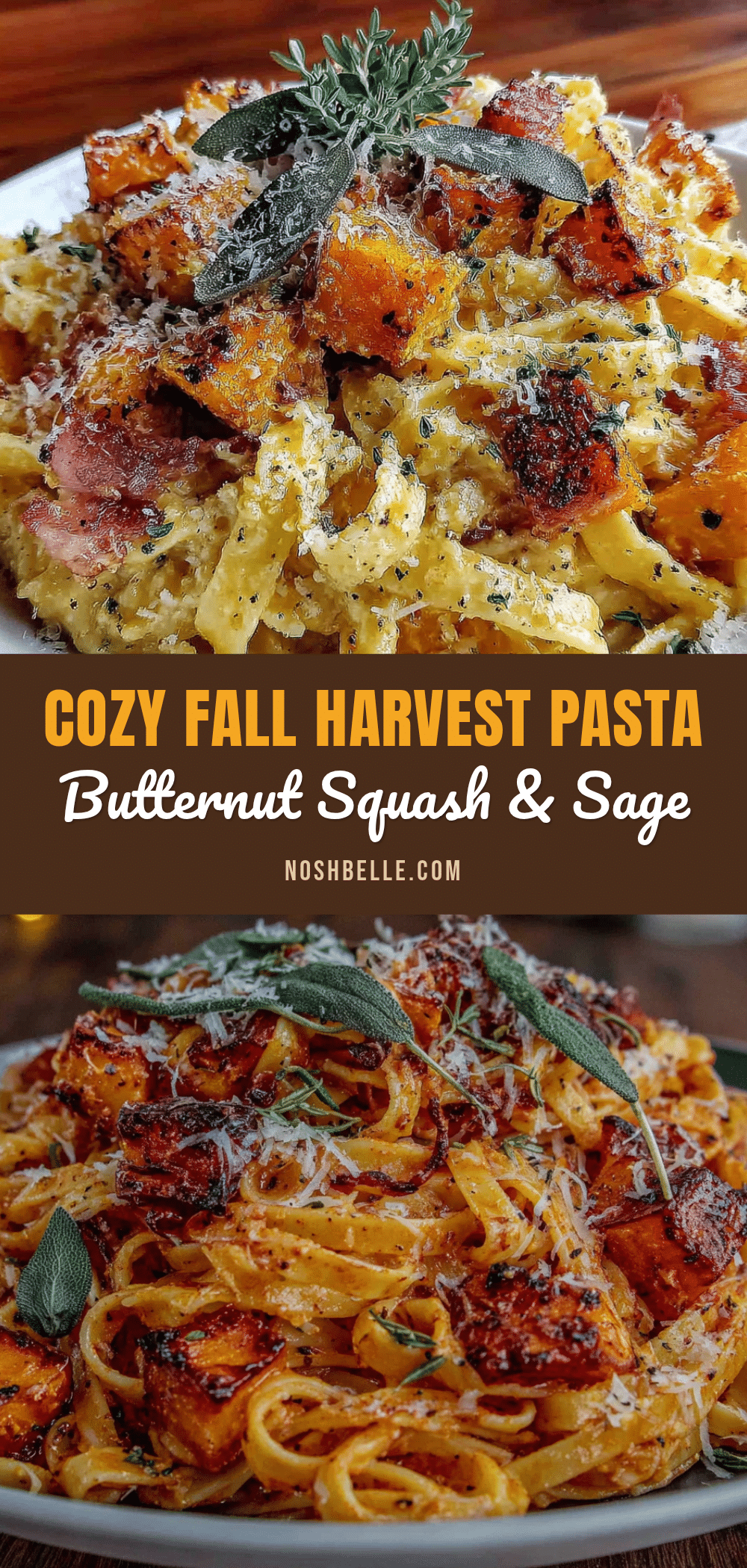
Easy Cozy Fall Harvest Pasta with Butternut Squash & Sage
A creamy, comforting pasta dish featuring caramelized butternut squash, crispy sage leaves, and a nutty brown butter sauce. Perfect for autumn gatherings or a cozy night in.
- Prep Time: 15 minutes
- Cook Time: 30 minutes
- Total Time: 45 minutes
- Yield: 4 servings 1x
- Category: Main Course
- Cuisine: American
Ingredients
- 1 medium butternut squash (about 2 pounds / 900g), peeled, seeded, and cut into ½-inch cubes
- 12 ounces (340g) short pasta (rigatoni, penne, or fusilli)
- 15–20 fresh sage leaves
- 4 tablespoons (56g) unsalted butter
- 4 cloves garlic, thinly sliced
- 1 medium shallot, finely diced
- ½ cup (120ml) chicken or vegetable broth, low-sodium
- ¼ cup (60ml) heavy cream
- ½ cup (50g) grated Parmesan cheese, plus more for serving
- 1 tablespoon (15ml) balsamic vinegar
- 2 tablespoons (30ml) olive oil
- Salt and black pepper to taste
- ¼ teaspoon red pepper flakes (optional)
- ¼ cup (35g) toasted pine nuts (optional)
Instructions
- Preheat oven to 425°F (220°C). Peel and cube butternut squash into ½-inch pieces. Toss with olive oil, ½ teaspoon salt, and ¼ teaspoon black pepper. Spread in a single layer on a baking sheet. Roast for 25-30 minutes, flipping halfway, until deeply caramelized and tender.
- Bring a large pot of generously salted water to a boil. Cook pasta according to package directions until al dente. Reserve 1 cup of pasta water before draining. Drain and set aside.
- In a large skillet or Dutch oven, melt butter over medium heat. Add sage leaves in a single layer and cook for 1-2 minutes per side until dark green and crispy. Transfer to a paper towel-lined plate. Continue cooking the butter, swirling occasionally, until it turns a deep amber color and smells nutty (about 2-3 minutes).
- Reduce heat to medium-low. Add sliced garlic and diced shallot to the browned butter. Cook for 1-2 minutes until fragrant and softened. Pour in broth and scrape up any browned bits from the pan. Simmer for 1 minute.
- Stir in heavy cream and let bubble gently for 1 minute. Add roasted butternut squash and stir to coat. Cook for 1-2 minutes until warmed through.
- Add drained pasta and ½ cup grated Parmesan to the skillet. Toss to combine. If sauce is too thick, add reserved pasta water a tablespoon at a time until desired consistency is reached. Drizzle with balsamic vinegar and toss once more. Season with salt and pepper to taste.
- Serve immediately in warm bowls. Top with crispy sage leaves, extra Parmesan, red pepper flakes, and toasted pine nuts if desired.
Notes
Cube the squash evenly for even roasting. Do not skip the balsamic vinegar—it brightens the dish. Reserve more pasta water than you think you need. Warm your serving bowls to keep the pasta hot. Season as you go for layered flavor.
Nutrition
- Serving Size: 1 serving (about 1.5
- Calories: 520
- Sugar: 8
- Sodium: 680
- Fat: 24
- Saturated Fat: 12
- Carbohydrates: 62
- Fiber: 8
- Protein: 16
Keywords: butternut squash pasta, fall pasta, harvest pasta, sage butter pasta, creamy pasta, autumn recipe