The woman at the community garden plot next to mine watched me struggle with a sad, deflated loaf of sourdough one Saturday morning. She didn’t say anything at first, just kept pulling weeds. Then she wiped her hands on her apron and said, “You’re fighting that dough too much. Let me show you something with your discard.” She reached into her basket and pulled out a small, misshapen pumpkin from her garden—the kind grocery stores would never sell. And honestly? That pumpkin and that conversation changed everything about how I bake.
I had been hoarding my sourdough discard in the fridge for weeks, feeling guilty every time I fed my starter and poured that tangy, bubbly liquid down the drain. It felt wasteful. And if you’ve ever kept a starter alive, you know that feeling—that nagging guilt of tossing what could have been something beautiful. My neighbor, whose name I later learned was Clara, didn’t believe in waste either. She showed me how to combine that discard with roasted pumpkin puree, and I remember thinking, “This is either going to be a disaster or the best thing I’ve ever baked.”
The first loaf came out lopsided, honestly. I forgot to score it properly, and it cracked in a way that looked more like a geological event than bread art. But the smell? That warm, spicy aroma of pumpkin and cinnamon filling my tiny kitchen made me close my eyes and just breathe. The crumb was tender, slightly tangy from the discard, and faintly sweet from the pumpkin. I’ve been making this Easy Pumpkin Sourdough Discard Bread ever since, tweaking it each time until it became the recipe I now share with everyone. It’s the kind of bread that makes you believe you’re actually a good baker—even when your first attempt looks a little wonky. Maybe you’ve been there, staring at a jar of discard and wondering what to do with it. This bread is your answer.
Why You’ll Love This Recipe
Let me be real with you—I have tested this recipe more times than I care to count. I have accidentally used active starter instead of discard (it worked fine, just a bit more bubbly). I have forgotten the salt entirely (don’t recommend that). I have baked it in a loaf pan, a Dutch oven, and even a cast iron skillet. Through all those experiments, this Easy Pumpkin Sourdough Discard Bread has earned its place as my most-requested fall recipe. Here is why it works:
- Quick & Easy: Unlike traditional sourdough that needs hours of rising and folding, this bread comes together in about two hours from start to finish. No complicated stretch-and-fold routines. No waiting overnight.
- Simple Ingredients: You probably have most of these in your pantry right now. Pumpkin puree, flour, butter, sugar, and that jar of discard sitting in your fridge feeling neglected.
- Perfect for Fall Mornings: This bread is made for cozy October weekends, Thanksgiving brunches, or those chilly mornings when you want the house to smell like a pumpkin spice dream.
- Crowd-Pleaser: I brought this to a neighborhood potluck last month, and three different people asked for the recipe before I even sat down. Even people who “don’t like sourdough” love this bread.
- Unbelievably Delicious: The combination of tangy discard and sweet pumpkin creates this subtle complexity that regular pumpkin bread just doesn’t have. It’s next-level comfort food, honestly.
What makes this recipe different from every other pumpkin bread out there is the sourdough discard. It adds a gentle tang that balances the sweetness of the pumpkin and spices perfectly. You get that unmistakable sourdough flavor without the long fermentation time. Plus, it uses up discard that would otherwise go down the drain—which feels like a small victory every single time.
This bread is the kind you make when you want to impress someone but also want to stay in your pajamas. It is comfort food reimagined—faster than traditional sourdough, but with the same soul-soothing satisfaction. Perfect for impressing guests without stress, or turning a simple Tuesday morning into something memorable.
What Ingredients You Will Need
This recipe uses simple, wholesome ingredients that work together to create a tender, flavorful loaf. Most of these are pantry staples, and the pumpkin puree is the star of the show. Let me walk you through each one so you know exactly what to look for.
For the Bread Batter
- 1 cup (240g) pumpkin puree — Use pure pumpkin puree, not pumpkin pie filling. I prefer Libby’s for consistent texture, but any brand works. If you’re feeling ambitious, homemade roasted pumpkin puree is incredible here—just make sure it’s well-drained so your bread isn’t soggy.
- 1 cup (240g) sourdough discard, unfed — Straight from the fridge is fine. It doesn’t need to be at room temperature. Active or discard both work, but discard gives that perfect tangy flavor without making the bread too bubbly.
- 1/2 cup (113g) unsalted butter, melted — Salted butter works too, just reduce the added salt by 1/4 teaspoon. I use Kerrygold when I want that extra richness, but honestly, store-brand works beautifully.
- 3/4 cup (150g) granulated sugar — You can reduce this to 1/2 cup if you prefer a less sweet bread. Brown sugar also works for a deeper flavor profile.
- 2 large eggs, room temperature — Cold eggs can seize the melted butter. If you forgot to set them out, place them in warm water for 5 minutes.
- 1 teaspoon vanilla extract — Pure vanilla is best, but imitation works in a pinch.
For the Dry Ingredients
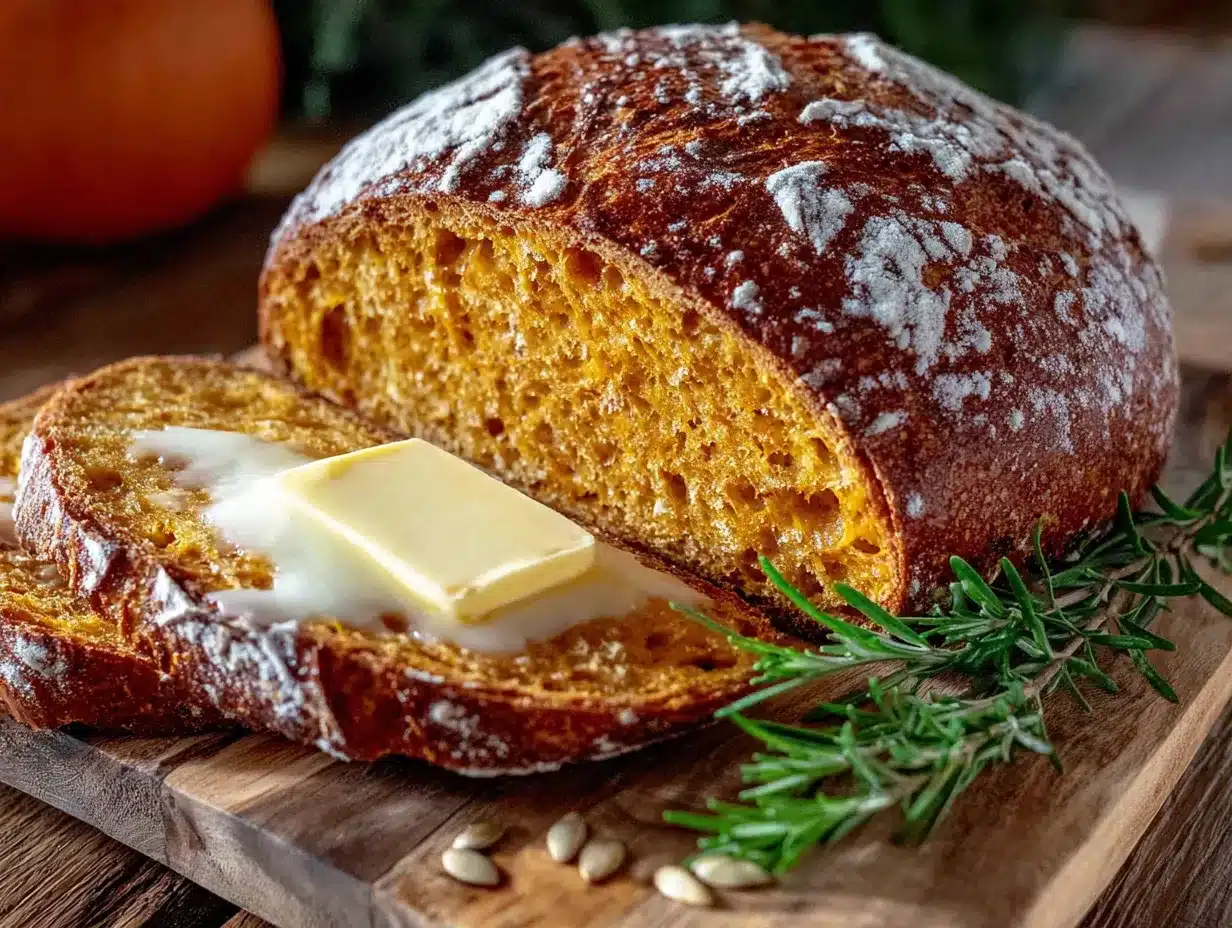
- 1 3/4 cups (220g) all-purpose flour — Spoon and level your flour for accuracy. Scooping directly from the bag can pack in too much flour and make your bread dry. Whole wheat pastry flour works as a partial substitute.
- 1 teaspoon baking soda — This provides the lift since we’re not relying on active sourdough fermentation. Make sure it’s fresh—test it by dropping a pinch in vinegar; it should fizz immediately.
- 1/2 teaspoon baking powder — Double-acting, so it gives a little lift in the oven.
- 1/2 teaspoon salt — Fine sea salt or table salt. Don’t skip this—it balances the sweetness and enhances the pumpkin flavor.
- 2 teaspoons pumpkin pie spice — Store-bought is fine, but I make my own with 1 teaspoon cinnamon, 1/2 teaspoon ginger, 1/4 teaspoon nutmeg, 1/4 teaspoon cloves, and a pinch of allspice. It’s fresher and you can adjust it to your taste.
- 1 teaspoon ground cinnamon — Because you can never have too much cinnamon in pumpkin bread.
Optional Add-Ins
- 1/2 cup (60g) chopped pecans or walnuts — Toast them first for deeper flavor. I toss them in a dry pan for 3 minutes until fragrant.
- 1/2 cup (90g) chocolate chips — Dark chocolate chips pair beautifully with the pumpkin and spice. Semi-sweet works too.
- 1/4 cup (40g) dried cranberries — Adds a chewy, tart pop that contrasts nicely with the soft crumb.
Equipment Needed
You don’t need a professional bakery setup for this bread. Here is what I use and what you can substitute if you’re improvising.
- 9×5-inch loaf pan — Standard size works perfectly. If you only have an 8×4-inch pan, the bread will take 5-10 minutes longer to bake and have a higher dome. I’ve used both and prefer the 9×5 for even baking.
- Mixing bowls — One large, one medium. Glass or stainless steel works best. I use my grandmother’s old Pyrex bowls, and they’ve never let me down.
- Whisk and rubber spatula — A whisk for the dry ingredients and a spatula for folding everything together. A wooden spoon works in a pinch.
- Parchment paper — Line your loaf pan with a sling for easy removal. If you don’t have parchment, grease the pan thoroughly with butter and dust with flour.
- Cooling rack — Essential for even cooling. If you don’t have one, you can use the oven rack (turned off and cool) or even chopsticks laid across a baking sheet.
- Measuring cups and spoons — For accuracy, especially with the pumpkin puree and discard. A kitchen scale is even better for consistent results.
Preparation Method
Alright, let’s make some bread. I’ve broken this down into clear steps with all the little details I wish someone had told me the first time I made it.
- Preheat your oven to 350°F (175°C). Position the rack in the center of the oven. While it’s heating, line your 9×5-inch loaf pan with parchment paper, leaving a 2-inch overhang on the long sides. This creates handles for lifting the bread out later. If you’re using a dark non-stick pan, reduce the temperature to 325°F (163°C) to prevent over-browning.
- Whisk the dry ingredients together. In a medium bowl, combine the all-purpose flour, baking soda, baking powder, salt, pumpkin pie spice, and cinnamon. Whisk them together for about 15 seconds—this aerates the flour and distributes the leavening agents evenly. Set this bowl aside. I like to make a small well in the center for adding the wet ingredients later.
- Mix the wet ingredients. In a large bowl, whisk together the pumpkin puree, sourdough discard, melted butter, granulated sugar, eggs, and vanilla extract. Whisk until smooth and well combined. The mixture will look a bit like thick pancake batter at this point. Don’t overmix—just until there are no streaks of egg or butter. If your discard was cold from the fridge, the mixture might look slightly separated at first. Keep whisking; it will come together.
- Combine wet and dry ingredients. Pour the wet ingredients into the well of the dry ingredients. Use a rubber spatula to fold everything together gently. Stir just until you no longer see streaks of flour—about 10 to 12 strokes. A few lumps are perfectly fine. Overmixing at this stage will develop gluten and make your bread tough and dense instead of tender. If you’re adding nuts, chocolate chips, or cranberries, fold them in during the last few strokes.
- Pour the batter into the prepared pan. Use the spatula to scrape every bit of batter into the pan. Spread it evenly, then give the pan a gentle tap on the counter to release any air bubbles. The batter will be thick and slightly shaggy—that’s exactly what you want. Smooth the top with the spatula.
- Bake for 50 to 60 minutes. Place the pan in the preheated oven and bake until a toothpick inserted into the center comes out clean or with just a few moist crumbs. Start checking at 50 minutes. The top should be golden brown and spring back when lightly pressed. If the top is browning too quickly (around the 40-minute mark), tent loosely with aluminum foil.
- Cool in the pan for 15 minutes. Set the pan on a cooling rack. Let it rest for exactly 15 minutes—this allows the structure to set so it doesn’t crumble when you remove it. Then use the parchment sling to lift the bread out and transfer it to the cooling rack.
- Cool completely before slicing. I know it’s tempting to cut into it while it’s warm, but trust me on this. Let the bread cool for at least 1 hour. Slicing too early will result in a gummy, falling-apart mess. The crumb needs time to set. If you can wait overnight, the flavors actually deepen and meld together beautifully.
Cooking Tips & Techniques
After making this Easy Pumpkin Sourdough Discard Bread about a dozen times, I’ve collected some tips that make the process smoother and the results more consistent. Let me share what I’ve learned the hard way so you don’t have to.
Don’t skip draining your pumpkin puree. The first time I made this, I used pumpkin straight from the can without draining it. The bread was delicious but had a slightly wet, dense texture in the center. Now I spoon the puree onto a paper towel-lined plate, cover with another paper towel, and let it sit for 10 minutes while I prep other ingredients. This removes excess moisture that can make your bread heavy. You’ll be surprised how much liquid comes out—about 2 to 3 tablespoons.
Temperature matters more than you think. Cold ingredients can cause the melted butter to seize up and create lumps in your batter. I always set my eggs and discard out on the counter 30 minutes before baking. If I forget, I place the eggs in a bowl of warm water for 5 minutes and microwave the discard in 10-second bursts until it’s no longer cold. Room temperature ingredients emulsify better, giving you a smoother, more uniform crumb.
The discard doesn’t need to be active. This is the beauty of this recipe—you can use discard straight from the fridge that has been sitting for weeks. In fact, older discard that is more acidic gives the bread a more pronounced sourdough tang that balances the sweetness beautifully. I’ve used discard that was a month old (don’t judge me) and it worked perfectly. Just make sure there’s no mold or funky smell.
Check for doneness with a thermometer. The toothpick test is reliable, but an instant-read thermometer is foolproof. The internal temperature of the bread should read between 200°F and 210°F (93°C to 99°C) when fully baked. This takes the guesswork out of “is it done?” and prevents that dreaded raw center.
Let it rest overnight for best flavor. I know, I know—waiting is hard. But if you can wrap the cooled loaf in plastic wrap and let it sit overnight, the flavors meld and deepen in a way that is truly magical. The pumpkin and spice become more pronounced, and the sourdough tang softens into something more complex. It’s like the bread needs to sleep on it too.
Variations & Adaptations
One of the things I love about this Easy Pumpkin Sourdough Discard Bread is how adaptable it is. Here are some variations I’ve tested and loved.
Gluten-Free Version: Substitute the all-purpose flour with a 1:1 gluten-free baking flour blend that contains xanthan gum. I’ve had great results with King Arthur Measure for Measure. The texture will be slightly more crumbly, but the flavor is just as good. Add an extra tablespoon of milk or water if the batter seems too thick.
Vegan Adaptation: Replace the eggs with flax eggs (2 tablespoons ground flaxseed mixed with 6 tablespoons water, let sit for 5 minutes). Use melted coconut oil or vegan butter instead of regular butter. The bread will be a bit denser but still incredibly moist and flavorful. I made this version for a friend with egg allergies, and she couldn’t tell the difference.
Lower Sugar Option: Reduce the sugar to 1/2 cup and add 1/4 cup of maple syrup or honey. The liquid sweetener will add moisture, so reduce the pumpkin puree by 2 tablespoons to compensate. The bread will be less sweet but still deliciously spiced. I actually prefer this version for breakfast with a pat of butter.
Pumpkin Chocolate Chip Loaf: Fold in 1/2 cup of dark chocolate chips and 1/4 cup of chopped pecans. The combination of warm pumpkin spice and melted chocolate is absolutely irresistible. I made this for a Halloween party, and it disappeared before the pumpkin pie.
Savory Pumpkin Bread: Omit the sugar and pumpkin pie spice. Add 1 teaspoon of garlic powder, 1 teaspoon of dried rosemary, and 1/2 cup of shredded cheddar cheese. This savory version is incredible with soup or as a base for turkey sandwiches. It uses the same method but creates a completely different flavor profile.
Serving & Storage Suggestions
This bread is incredibly versatile when it comes to serving. Here is how I enjoy it and how to keep it fresh.
Serving Temperature: This bread is delicious at room temperature, slightly warm, or even toasted. For the ultimate experience, slice a piece, toast it lightly, and spread with salted butter and a drizzle of honey. The warmth brings out the pumpkin spice aromas in a way that fills your whole kitchen. I also love it with a smear of cream cheese frosting for a dessert-like treat.
What to Serve With It: A hot cup of coffee or chai tea is my go-to pairing. For brunch, serve it alongside scrambled eggs and crispy bacon for a sweet-savory balance. It also makes an excellent base for a fall-inspired bread pudding—just cube day-old bread, toss with a custard of eggs, milk, and maple syrup, and bake until golden.
Storage Instructions: Store the bread wrapped tightly in plastic wrap or in an airtight container at room temperature for up to 4 days. The moisture from the pumpkin actually helps keep it soft longer than regular quick breads. If your kitchen is warm or humid, refrigerate it to prevent mold—just bring slices to room temperature before serving for the best texture.
Freezing Instructions: This bread freezes beautifully. Let it cool completely, then wrap tightly in plastic wrap, followed by a layer of aluminum foil. Freeze for up to 3 months. To thaw, leave it on the counter overnight still wrapped, or unwrap and microwave individual slices for 20 to 30 seconds. I always bake a double batch and freeze one loaf for those mornings when I want fresh bread without the effort.
Flavor Development: The flavors actually improve after a day or two. The sourdough tang mellows, and the pumpkin spice becomes more integrated. If you can resist eating it immediately, wrap it and let it sit overnight. You’ll thank me tomorrow.
Nutritional Information & Benefits
While I’m not a nutritionist, I can share what I know about the ingredients in this Easy Pumpkin Sourdough Discard Bread. Each slice (based on 12 slices per loaf) contains approximately:
- Calories: 220
- Fat: 10g
- Carbohydrates: 30g
- Fiber: 2g
- Sugar: 14g
- Protein: 4g
Health Benefits of Pumpkin: Pumpkin is packed with vitamin A (beta-carotene), which supports eye health and immune function. It’s also rich in fiber, which aids digestion and helps you feel full longer. Using pumpkin puree adds moisture and nutrients without extra fat or calories, making this bread a slightly more nutritious treat than traditional quick breads.
Sourdough Benefits: The fermentation process in sourdough discard breaks down some of the phytic acid in flour, making the nutrients more bioavailable. Some people with mild gluten sensitivities find sourdough easier to digest than regular bread. The tangy flavor also means you can use less sugar since the natural acidity balances the sweetness.
Dietary Considerations: This recipe can be adapted to be dairy-free (use coconut oil or vegan butter), egg-free (use flax eggs), and lower in sugar (reduce to 1/2 cup). It is not gluten-free in its standard form, but the gluten-free variation works well. Always check your ingredients for potential allergens if serving others.
Conclusion
This Easy Pumpkin Sourdough Discard Bread has become a staple in my kitchen for good reason. It solves the problem of what to do with sourdough discard, captures the cozy flavors of fall, and comes together with minimal fuss. Every time I make it, I think about Clara and her misshapen pumpkin, and how a small act of sharing can change the way you cook forever.
I hope you make this bread your own. Add chocolate chips if that’s your thing. Reduce the sugar if you prefer less sweetness. Experiment with different spice blends. The recipe is forgiving and flexible, just like the best kitchen traditions. And if your first loaf comes out a little lopsided? That’s okay. It will still taste incredible, and you’ll know exactly what to adjust next time.
I would love to hear how this bread turns out for you. Did you make any adaptations? Did it disappear as fast as mine always does? Drop a comment below and share your experience. And if you know someone with a jar of discard sitting in their fridge, send them this recipe. They’ll thank you later.
Happy baking, friends. Your kitchen is about to smell amazing.
Frequently Asked Questions
Can I use active sourdough starter instead of discard?
Yes, absolutely. Active starter will work perfectly in this recipe. The bread might rise slightly more and have a milder tang, but it will still be delicious. Just keep in mind that active starter contains more water, so the batter might be slightly thinner. If that happens, add an extra tablespoon of flour to compensate.
Why is my pumpkin bread dense and heavy?
This usually happens for one of three reasons: overmixing the batter (which develops too much gluten), using too much pumpkin puree without draining it, or underbaking. Make sure to fold the ingredients gently until just combined, drain your pumpkin puree on paper towels, and bake until a toothpick comes out clean or the internal temperature reaches 200°F.
Can I make this bread without a loaf pan?
You can absolutely make this without a traditional loaf pan. Pour the batter into a greased 8×8-inch square baking pan and bake for 30 to 35 minutes. You can also use a muffin tin for pumpkin sourdough discard muffins—bake for 18 to 22 minutes. Just keep an eye on the timing since smaller portions bake faster.
How do I know when my sourdough discard is still good to use?
Your discard is safe to use as long as it doesn’t have any mold on the surface, doesn’t smell like acetone or nail polish remover, and doesn’t have any pink or orange streaks. A layer of grayish liquid on top (called hooch) is normal—just stir it back in or pour it off. If in doubt, throw it out and start fresh. Your health is not worth risking over a jar of discard.
Can I double this recipe?
Yes, this recipe doubles beautifully. Use two 9×5-inch loaf pans and bake them side by side. The baking time will be about the same, but start checking at 50 minutes. I often double the batch and freeze one loaf for later. The only thing to watch out for is your mixing bowl size—make sure it’s big enough to hold all the ingredients without overflowing.
Pin This Recipe!
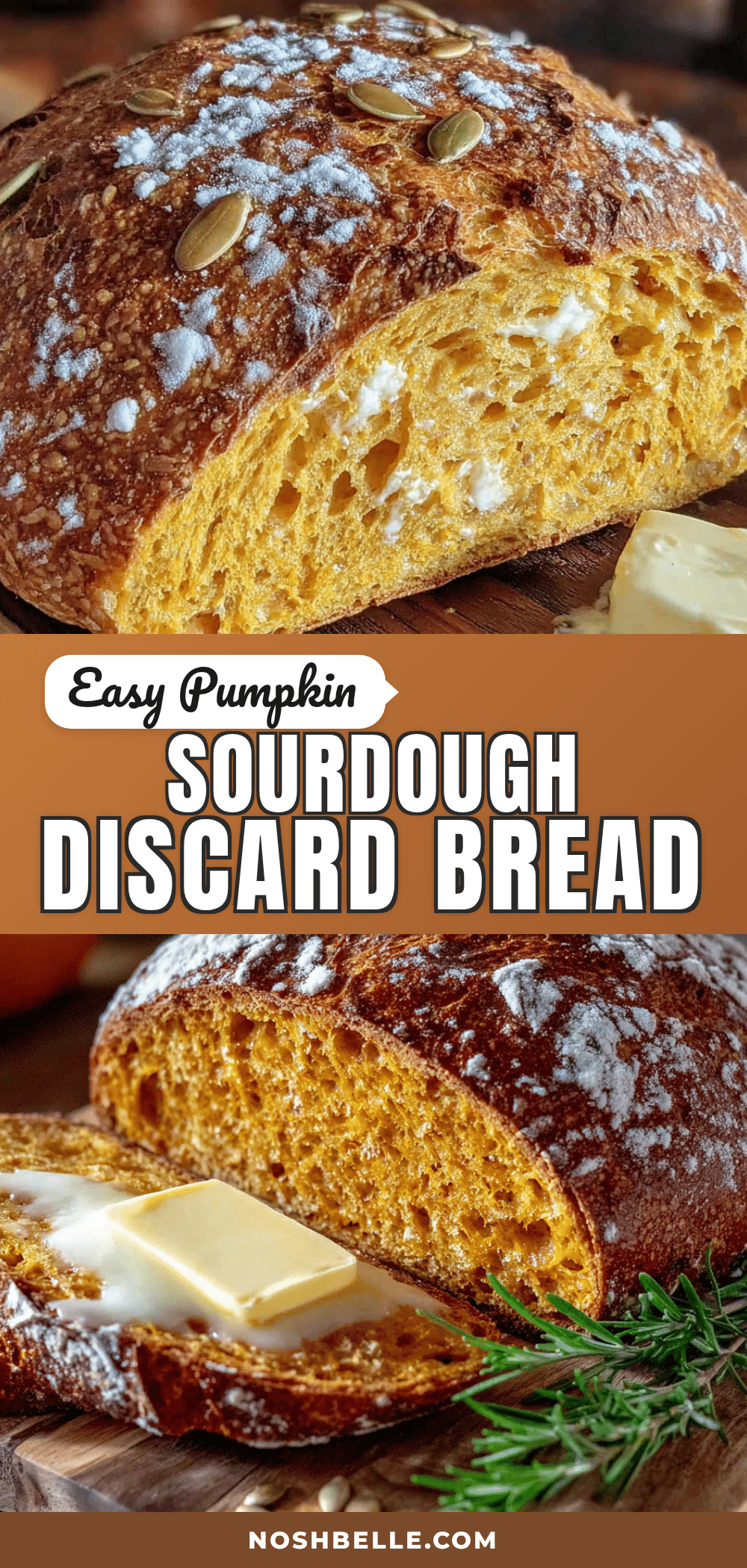
Easy Pumpkin Sourdough Discard Bread (Best Recipe)
This easy pumpkin sourdough discard bread combines tangy sourdough discard with sweet pumpkin puree and warm spices for a tender, flavorful loaf that comes together in about two hours. Perfect for fall mornings, it uses up discard that would otherwise go to waste and is a crowd-pleaser every time.
- Prep Time: 15 minutes
- Cook Time: 55 minutes
- Total Time: 1 hour 10 minutes
- Yield: 12 servings 1x
- Category: Bread
- Cuisine: American
Ingredients
- 1 cup (240g) pumpkin puree
- 1 cup (240g) sourdough discard, unfed
- 1/2 cup (113g) unsalted butter, melted
- 3/4 cup (150g) granulated sugar
- 2 large eggs, room temperature
- 1 teaspoon vanilla extract
- 1 3/4 cups (220g) all-purpose flour
- 1 teaspoon baking soda
- 1/2 teaspoon baking powder
- 1/2 teaspoon salt
- 2 teaspoons pumpkin pie spice
- 1 teaspoon ground cinnamon
- 1/2 cup (60g) chopped pecans or walnuts (optional)
- 1/2 cup (90g) chocolate chips (optional)
- 1/4 cup (40g) dried cranberries (optional)
Instructions
- Preheat your oven to 350°F (175°C). Position the rack in the center of the oven. Line a 9×5-inch loaf pan with parchment paper, leaving a 2-inch overhang on the long sides.
- In a medium bowl, whisk together the all-purpose flour, baking soda, baking powder, salt, pumpkin pie spice, and cinnamon for about 15 seconds. Set aside.
- In a large bowl, whisk together the pumpkin puree, sourdough discard, melted butter, granulated sugar, eggs, and vanilla extract until smooth and well combined.
- Pour the wet ingredients into the dry ingredients. Use a rubber spatula to fold together gently until no streaks of flour remain (about 10 to 12 strokes). If adding nuts, chocolate chips, or cranberries, fold them in during the last few strokes.
- Pour the batter into the prepared loaf pan and spread evenly. Tap the pan gently on the counter to release air bubbles.
- Bake for 50 to 60 minutes, until a toothpick inserted into the center comes out clean or with a few moist crumbs. If the top browns too quickly, tent loosely with aluminum foil.
- Cool in the pan on a cooling rack for 15 minutes. Then use the parchment sling to lift the bread out and transfer to the rack to cool completely (at least 1 hour) before slicing.
Notes
For best flavor, let the cooled loaf rest overnight wrapped in plastic wrap. Drain pumpkin puree on paper towels for 10 minutes to remove excess moisture. Use discard straight from the fridge; older discard gives a more pronounced tang. Check doneness with an instant-read thermometer (internal temperature should be 200°F to 210°F).
Nutrition
- Serving Size: 1 slice
- Calories: 220
- Sugar: 14
- Sodium: 280
- Fat: 10
- Saturated Fat: 5
- Carbohydrates: 30
- Fiber: 2
- Protein: 4
Keywords: pumpkin bread, sourdough discard, fall baking, easy bread, pumpkin spice, sourdough discard recipe