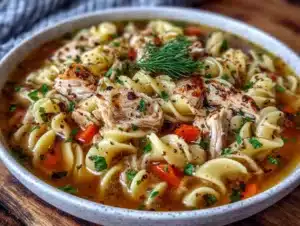
My Aunt Carol wasn’t trying to impress anyone. I’d stopped by to drop off a book I’d borrowed, and the smell hit me before I even got through the screen door. That smell—onions softening in butter, chicken simmering, something herbal I couldn’t quite name. She was standing at the stove in her gardening clothes, stirring a pot with a wooden spoon that looked like it had been through a war. “Oh, it’s just soup,” she said when I asked what was cooking. Just soup. Like it was nothing.
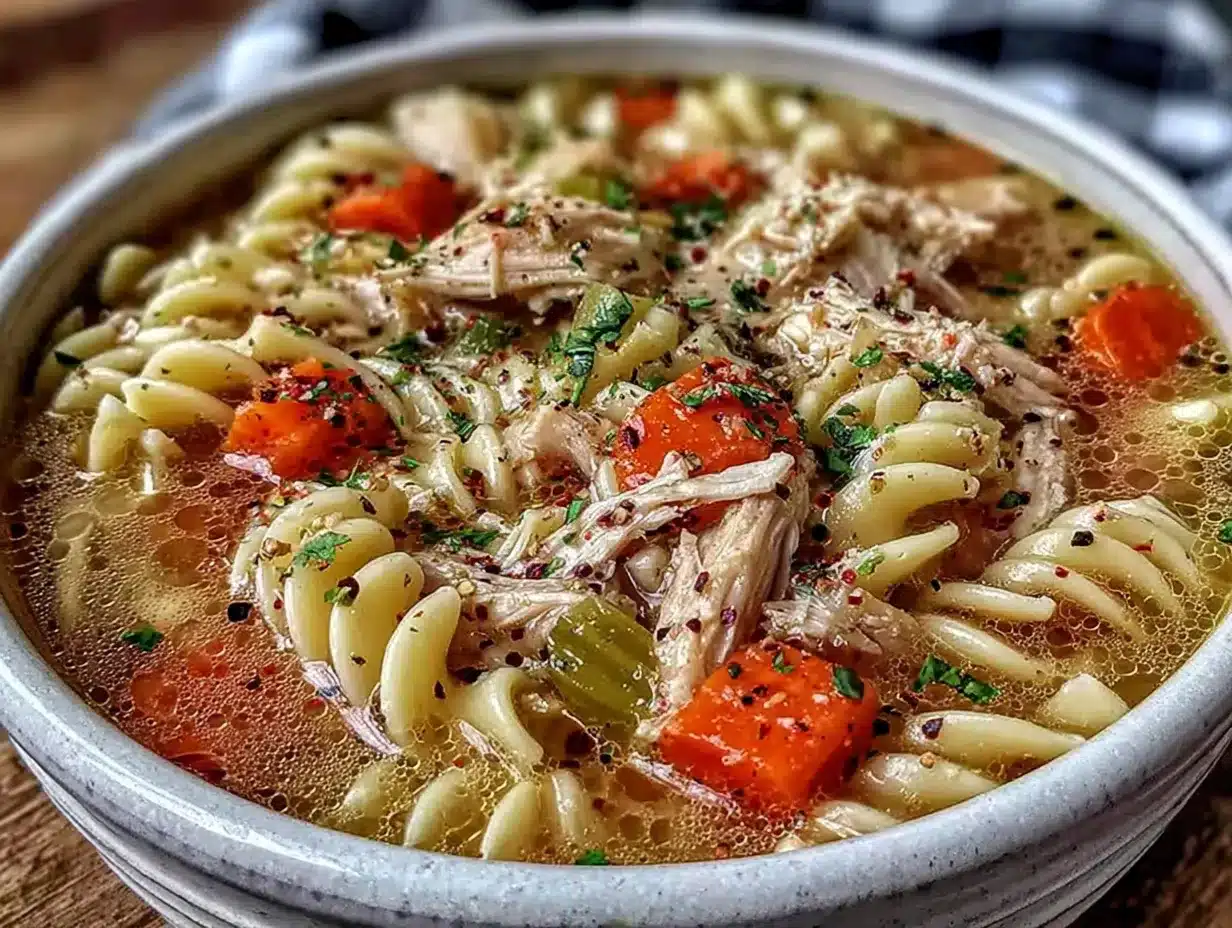
But it wasn’t nothing. It was the kind of soup that makes you close your eyes after the first spoonful. The broth was golden and clear, not cloudy or greasy. The noodles had that perfect chew, and the chicken fell apart without any effort. I stood there in her kitchen, bowl in hand, while she told me she’d learned it from her grandmother—who learned it from hers. No written recipe, just memory and feel and a handful of this and a pinch of that.
I begged her to walk me through it while she made it the next week, and I took notes like I was studying for a final exam. Maybe you’ve been there—standing in someone’s kitchen, watching them make something that feels almost magical, and thinking, I need to learn this. That’s exactly how this recipe came to be. It’s not fancy. It doesn’t have any secret ingredients or complicated techniques. But honest to goodness, it’s the best chicken noodle soup I’ve ever had, and I’ve been making it ever since that afternoon in Aunt Carol’s kitchen.
Why You’ll Love This Recipe
This isn’t just another chicken noodle soup recipe floating around the internet. I’ve tested this version dozens of times, tweaking and adjusting until it matched what I remembered from that afternoon. And honestly, it’s the one soup I make when someone in my house is feeling under the weather, or when I just need something warm and comforting after a long day.
- Made from Scratch, but Totally Doable: Yes, you’re making the stock from scratch. But it’s easier than you think, and the flavor difference is night and day. No boxed broth can touch this.
- Simple Ingredients: You probably already have most of these in your pantry. No weird specialty items or expensive cuts of meat.
- Perfect for Meal Prep: This soup actually gets better after a day in the fridge. Make it on Sunday and enjoy it all week.
- Family-Approved: My kids fight over the noodles. My husband asks for seconds. Even my picky mother-in-law went back for more.
- Comfort in a Bowl: There’s something about a slow-simmered chicken soup that just feels like a hug. It’s the kind of meal that makes everything feel a little bit better.
What makes this recipe different from all the others? It’s the technique. Most recipes rush the stock or skip the step of browning the vegetables first. But taking those extra few minutes to build flavor at the beginning makes all the difference. The broth ends up rich and deeply savory, not watery or bland. And the chicken—oh, the chicken. It’s cooked right in the stock, so it stays tender and juicy, not dry and stringy.
This is the kind of soup that makes you slow down. The kind that fills your kitchen with that unmistakable aroma and makes everyone wander in asking what’s for dinner. It’s wholesome, nourishing, and honestly, it’s the recipe I’m most proud to share.
What Ingredients You Will Need
This recipe uses simple, wholesome ingredients to create something truly special. Most of these are pantry staples, so you might not even need a grocery run. The key is using good-quality ingredients and giving them the time they need to shine.
For the Stock
- 3 to 4 pounds bone-in, skin-on chicken pieces (I use a mix of thighs and breasts—the bones add flavor, and the skin adds richness)
- 2 large carrots, roughly chopped (no need to peel them for the stock—you’re straining it anyway)
- 2 celery stalks, roughly chopped
- 1 large onion, quartered (leave the skin on—it adds color to the broth)
- 4 cloves garlic, smashed
- 2 bay leaves
- 1 teaspoon whole black peppercorns
- 1 tablespoon salt
- 10 cups cold water (enough to cover the chicken by about an inch)
For the Soup
- 2 tablespoons unsalted butter (or olive oil if you prefer)
- 1 large onion, diced
- 3 carrots, peeled and sliced into rounds
- 3 celery stalks, sliced
- 2 cloves garlic, minced
- 1 teaspoon dried thyme
- 1 teaspoon dried rosemary
- 1/2 teaspoon turmeric (optional, but adds gorgeous color and anti-inflammatory benefits)
- 8 ounces wide egg noodles (I prefer Reames or homemade, but any brand works)
- 1/4 cup fresh parsley, chopped (for garnish)
- Salt and black pepper to taste
I want to talk about the chicken for a second. Bone-in, skin-on pieces are non-negotiable here. I know it’s tempting to use boneless skinless breasts because they’re convenient, but you’ll lose so much flavor. The bones release collagen into the stock, giving it that silky mouthfeel, and the skin adds richness. If you’re watching your fat intake, you can skim the fat off the top after the stock chills. But don’t skip the bones.
For the noodles, wide egg noodles are traditional, but you can use whatever pasta you have on hand. I’ve made this with broken spaghetti, small shells, and even orzo. Just adjust the cooking time based on what you’re using. And if you’re gluten-free, rice noodles or chickpea pasta work beautifully.
One ingredient tip I learned from Aunt Carol: don’t skip the turmeric. It’s not traditional in every chicken noodle soup, but it adds this beautiful golden color and a subtle earthy note that makes the broth look and taste like it simmered all day. Plus, it’s good for you.
Equipment Needed
You don’t need a lot of fancy equipment for this recipe, which is part of what makes it so approachable. Here’s what you’ll need:
- Large stockpot or Dutch oven (at least 6 quarts—you need room for the chicken and all those vegetables)
- Fine-mesh strainer (for straining the stock. If you don’t have one, a colander lined with cheesecloth works too)
- Large bowl (to catch the strained stock)
- Cutting board and sharp knife
- Wooden spoon (for stirring—I swear by my old one that’s stained from years of use)
- Measuring cups and spoons
- Tongs (for removing the chicken from the pot)
- Ladle (for serving)
If you don’t have a Dutch oven, a heavy-bottomed stockpot works just fine. The key is something that distributes heat evenly so your soup doesn’t scorch on the bottom. I’ve made this in a cheap stockpot from the grocery store, and it still turned out great. Don’t let equipment hold you back.
One tool I’d recommend investing in is a good fine-mesh strainer. It makes straining the stock so much easier, and you’ll use it for all sorts of things. I found mine at a restaurant supply store for about ten dollars, and it’s lasted me years.
Preparation Method
Alright, let’s get cooking. This recipe takes a little time, but most of it is hands-off. The actual work is maybe 30 minutes. The rest is just letting the pot do its thing.
- Make the stock. Place the chicken pieces in your stockpot. Add the roughly chopped carrots, celery, quartered onion, smashed garlic, bay leaves, peppercorns, and salt. Pour in the cold water—it should cover the chicken by about an inch. Bring it to a boil over high heat, then reduce the heat to low so it’s barely simmering. You should see small bubbles, not a rolling boil. Let it simmer for 1 1/2 to 2 hours. Don’t walk away completely—check occasionally and skim off any foam that rises to the surface. This keeps your broth clear instead of cloudy.
- Strain the stock. Place your fine-mesh strainer over a large bowl. Carefully pour the contents of the pot through the strainer. Discard the vegetables and aromatics—they’ve given all their flavor to the stock. Set the chicken pieces aside on a plate to cool.
- Shred the chicken. Once the chicken is cool enough to handle (about 10 minutes), remove the skin and bones. Shred the meat into bite-sized pieces using two forks or your fingers. Set aside. You should have about 4 to 5 cups of shredded chicken.
- Sauté the aromatics. Wipe out your stockpot (or use a clean one). Melt the butter over medium heat. Add the diced onion, sliced carrots, and celery. Cook for 5 to 7 minutes, stirring occasionally, until the vegetables start to soften and the onion turns translucent. The smell at this point is incredible—that’s the foundation of your soup’s flavor.
- Add the garlic and herbs. Stir in the minced garlic, dried thyme, dried rosemary, and turmeric if using. Cook for another minute until fragrant. Don’t skip this step—raw garlic can be harsh, and cooking it briefly mellows it out beautifully.
- Combine stock and vegetables. Pour the strained stock back into the pot with the sautéed vegetables. Bring it to a boil, then reduce the heat to a simmer. Taste the broth and adjust the salt and pepper. Remember, you’ll be adding noodles that will absorb some of the salt, so it should be slightly saltier than you think it needs to be right now.
- Cook the noodles. Add the egg noodles to the simmering broth. Cook according to package directions, usually 6 to 8 minutes for wide egg noodles. Stir occasionally to prevent them from sticking to the bottom of the pot. The noodles will continue to absorb liquid as they sit, so don’t overcook them—they should be tender but still have a little bite.
- Add the chicken. Once the noodles are cooked, stir in the shredded chicken. Let it heat through for about 2 minutes. You don’t want to boil the chicken again or it can get tough.
- Finish and serve. Remove the pot from the heat. Stir in the fresh parsley. Ladle the soup into bowls and serve hot. The parsley adds a fresh, bright note that cuts through the richness of the broth.
A few notes from my many batches of this soup: if you’re planning to have leftovers, consider cooking the noodles separately and adding them to each bowl as you serve. Noodles left in the soup overnight will absorb a lot of the broth and get mushy. It’s still delicious, but the texture changes. I’ve also learned to taste the broth at every stage—before adding the noodles, after adding the chicken, and right before serving. Seasoning in layers makes a huge difference.
Cooking Tips & Techniques
I’ve made this soup more times than I can count, and I’ve learned a few things along the way. Some of these tips came from Aunt Carol herself, and others I figured out through trial and error—mostly error, if I’m being honest.
Don’t rush the stock. I know it’s tempting to speed things up, but low and slow is the way to go. A rapid boil will make your broth cloudy and can toughen the chicken. Keep it at a gentle simmer, and you’ll be rewarded with a clear, flavorful stock that tastes like it’s been cooking all day.
Skim the foam. In the first 20 minutes of simmering, you’ll see foam rising to the surface. This is just impurities and proteins coagulating. Skim it off with a spoon or ladle. It takes two minutes and makes a noticeable difference in the clarity of your broth.
Season carefully. I once oversalted a batch of this soup because I didn’t account for the salt in the stock. Remember, you already added salt to the stock at the beginning. When you’re seasoning the final soup, taste it first before adding more. You can always add salt, but you can’t take it out.
Let the chicken rest. After you strain the stock, let the chicken cool on a plate for at least 10 minutes before you try to shred it. Not only will it be easier to handle, but the meat will be more tender. Hot chicken tends to fall apart into mush when you try to shred it.
Make it ahead. This soup actually tastes better the next day. The flavors meld together and deepen overnight. If you’re planning ahead, make the stock and shred the chicken a day in advance. Store them separately in the fridge, then assemble the soup the next day. It makes the whole process feel much easier.
Watch the noodles. I cannot stress this enough—noodles continue to cook and absorb liquid even after you’ve turned off the heat. If you’re serving the soup immediately, cook them to al dente. If you’re planning to have leftovers, cook them separately and add them to each bowl. I learned this the hard way when I ended up with a pot of mushy noodle soup for three days straight.
Variations & Adaptations
One of the best things about this soup is how adaptable it is. I’ve made so many versions over the years, and they’ve all been delicious in their own way. Here are some of my favorites:
Gluten-Free Version
Swap the egg noodles for gluten-free pasta or rice noodles. I’ve had great luck with brown rice pasta and chickpea pasta. Just be careful not to overcook them—gluten-free pasta tends to go from perfect to mushy very quickly. You could also use cooked rice instead of noodles for a completely different but equally comforting soup.
Vegetarian Version
This one surprised me. I made it for a friend who doesn’t eat meat, and honestly, it was fantastic. Skip the chicken and use vegetable stock instead. Add a can of drained and rinsed chickpeas or white beans for protein. Load up on extra vegetables—I like adding zucchini, spinach, and mushrooms. The mushrooms add that savory, umami flavor that you’d normally get from the chicken.
Extra-Hearty Version
When I want this soup to be a full meal, I add more vegetables. Diced potatoes or sweet potatoes, sliced mushrooms, chopped kale or spinach, even some frozen peas thrown in at the end. You can also add a cup of cooked rice or quinoa along with the noodles for extra bulk. This version is perfect for cold winter nights when you need something that really sticks to your ribs.
Lighter Version
If you’re watching your calories or fat intake, this soup is already pretty healthy. But you can make it even lighter by skimming the fat off the stock after it chills. I usually make the stock a day ahead and refrigerate it overnight. The fat solidifies on top, and you can just lift it off with a spoon. Use olive oil instead of butter for sautéing the vegetables, and load up on extra vegetables to make it more filling without adding many calories.
Spicy Version
Add a pinch of red pepper flakes or a diced jalapeño when you sauté the vegetables. Stir in a tablespoon of fresh ginger along with the garlic. A squeeze of lime juice at the end brightens everything up. This version is my go-to when I have a cold—the heat helps clear my sinuses, and the ginger is soothing for an upset stomach.
Serving & Storage Suggestions
This soup is wonderful served piping hot in big, deep bowls. I like to garnish each bowl with a generous sprinkle of fresh parsley and a crack of black pepper. Sometimes I add a squeeze of lemon juice right before serving—it brightens the whole soup and makes the flavors pop.
For serving, this soup pairs beautifully with crusty bread or buttery crackers. A simple side salad with a lemony vinaigrette is also lovely. If I’m serving it for dinner, I’ll often make a grilled cheese sandwich to go alongside. There’s something about the combination of creamy, melted cheese and savory soup that’s just perfect.
Storage: Store leftover soup in an airtight container in the refrigerator for up to 4 days. As I mentioned earlier, the noodles will continue to absorb liquid, so the soup will thicken over time. If you’re storing it for more than a day, consider storing the noodles separately and adding them when you reheat.
Freezing: This soup freezes beautifully, but with one caveat—freeze it without the noodles. The noodles will turn to mush when thawed and reheated. Make the soup up to the point of adding the noodles, then let it cool completely. Transfer to freezer-safe containers, leaving an inch of headspace for expansion. Freeze for up to 3 months. When you’re ready to eat, thaw the soup in the refrigerator overnight, then reheat and add fresh noodles.
Reheating: Reheat the soup gently on the stovetop over medium-low heat, stirring occasionally. You can also microwave individual portions in a microwave-safe bowl for 2 to 3 minutes, stirring halfway through. If the soup has thickened too much, add a splash of water or chicken stock to thin it out.
One thing I’ve noticed is that the flavors continue to develop over time. Day-old soup often tastes even better than the fresh version. The herbs meld together, the chicken absorbs more of the broth, and everything becomes more cohesive. It’s one of those rare dishes that actually improves with age.
Nutritional Information & Benefits
This soup is not just delicious—it’s genuinely good for you. Here’s the estimated nutritional breakdown for one serving (about 1 1/2 cups, assuming 8 servings total):
| Nutrient | Amount per Serving |
|---|---|
| Calories | 285 |
| Protein | 28g |
| Carbohydrates | 22g |
| Fiber | 3g |
| Fat | 9g |
| Saturated Fat | 3g |
| Sodium | 680mg |
The health benefits of this soup go beyond the numbers. The bone-in chicken releases collagen and gelatin into the broth, which is great for joint health, skin elasticity, and gut health. The carrots provide beta-carotene, which supports immune function and eye health. Celery is a good source of antioxidants and anti-inflammatory compounds. Garlic and onions contain compounds that boost the immune system and may help fight off colds.
This soup is naturally gluten-free if you use gluten-free noodles, and it’s dairy-free as written (the butter can be swapped for olive oil). It’s also relatively low in calories and fat while being high in protein, making it a satisfying meal that won’t weigh you down.
From a wellness perspective, this is the kind of food I feel good about eating regularly. It’s nourishing without being restrictive, comforting without being heavy. It fits perfectly into a balanced, health-conscious lifestyle without sacrificing an ounce of flavor.
Conclusion
I still think about that afternoon in Aunt Carol’s kitchen. The way she shrugged off my questions, the way she said it was just soup, like it was nothing special. But it was special. It is special. And now it’s your turn to make it.
This recipe is more than just instructions—it’s a connection to something older and slower. It’s the kind of food that our grandmothers made without thinking twice, and it deserves to be carried forward. I hope you’ll make it on a cold day, or when someone you love isn’t feeling well, or just because you need something warm and good in your life.
Don’t be afraid to make it your own. Add extra vegetables, adjust the herbs, swap in different noodles. The beauty of a recipe like this is that it’s forgiving. It wants to be adapted. It wants to become your family’s version, just like it became mine.
When you make this soup—and I really hope you do—come back and let me know how it turned out. Did you add something unexpected? Did your kids ask for seconds? Did it make your kitchen smell like love? I want to hear about it. Leave a comment below, and let’s keep this soup going for another generation.
Frequently Asked Questions
Can I use boneless, skinless chicken breasts instead?
You can, but you’ll lose a lot of flavor. The bones and skin add richness and depth to the stock that you just can’t get from boneless meat. If you’re short on time, use a mix of bone-in and boneless pieces to get some of that flavor without the extra work.
How do I make this soup in a slow cooker or Instant Pot?
For a slow cooker, add all the stock ingredients and cook on low for 6 to 8 hours. Strain, shred the chicken, then return the broth to the slow cooker with the sautéed vegetables and noodles. Cook on high for 20 to 30 minutes until the noodles are tender. For an Instant Pot, cook the stock ingredients on high pressure for 30 minutes, then do a natural release. Proceed with the soup as directed.
Can I use frozen vegetables?
Absolutely. Frozen carrots, celery, and onions work fine in a pinch. I wouldn’t use them for the stock (fresh vegetables release more flavor), but for the soup itself, frozen vegetables are a great time-saver. Add them directly to the pot without thawing—just increase the cooking time by a few minutes.
Why is my broth cloudy?
Cloudy broth usually means you boiled it too hard. A rapid boil agitates the fat and proteins, emulsifying them into the liquid. Keep the stock at a gentle simmer—small bubbles, not a rolling boil. Also, make sure you’re skimming the foam off the top during the first 20 minutes of cooking.
How can I make this soup more flavorful?
Roast the chicken and vegetables in the oven before adding them to the stock. The caramelization adds incredible depth. You can also add a parmesan rind to the stock while it simmers, or stir in a tablespoon of miso paste at the end for an umami boost. Fresh herbs at the end—parsley, dill, or thyme—make a big difference too.
Pin This Recipe!
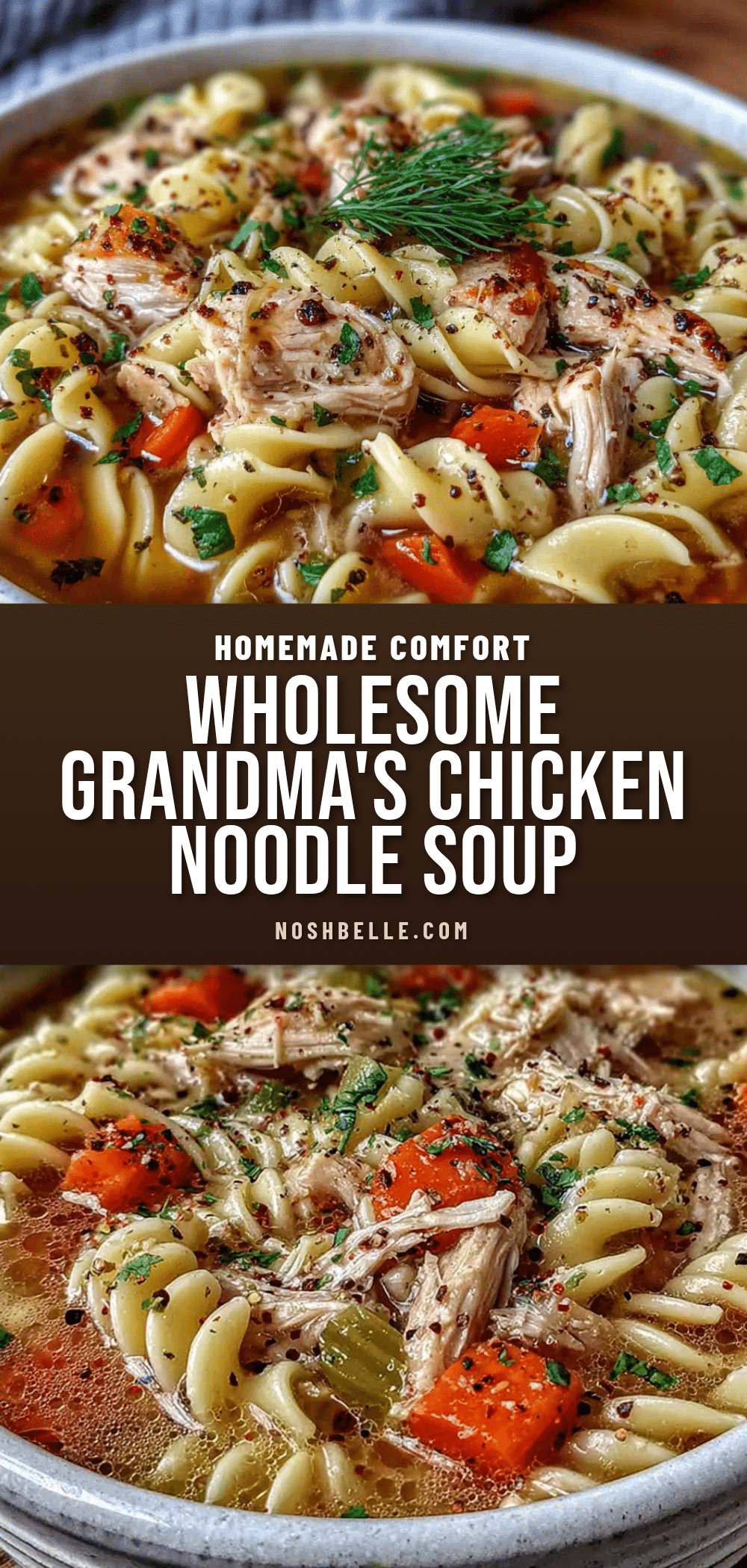
Wholesome Grandma’s Chicken Noodle Soup from Scratch

This is the best chicken noodle soup you’ll ever have—a golden, clear broth with tender chicken and perfectly chewy noodles, made from scratch with simple ingredients. It’s the kind of soup that feels like a hug in a bowl, perfect for cold days or when someone needs comforting.
- Prep Time: 30 minutes
- Cook Time: 2 hours
- Total Time: 2 hours 30 minutes
- Yield: 8 servings 1x
- Category: Soup
- Cuisine: American
Ingredients
- 3 to 4 pounds bone-in, skin-on chicken pieces (mix of thighs and breasts)
- 2 large carrots, roughly chopped
- 2 celery stalks, roughly chopped
- 1 large onion, quartered (skin on)
- 4 cloves garlic, smashed
- 2 bay leaves
- 1 teaspoon whole black peppercorns
- 1 tablespoon salt
- 10 cups cold water
- 2 tablespoons unsalted butter (or olive oil)
- 1 large onion, diced
- 3 carrots, peeled and sliced into rounds
- 3 celery stalks, sliced
- 2 cloves garlic, minced
- 1 teaspoon dried thyme
- 1 teaspoon dried rosemary
- 1/2 teaspoon turmeric (optional)
- 8 ounces wide egg noodles
- 1/4 cup fresh parsley, chopped
- Salt and black pepper to taste
Instructions
- Make the stock: Place chicken pieces in a large stockpot. Add roughly chopped carrots, celery, quartered onion, smashed garlic, bay leaves, peppercorns, and salt. Pour in cold water to cover chicken by about an inch. Bring to a boil over high heat, then reduce to a gentle simmer. Cook for 1 1/2 to 2 hours, skimming off any foam that rises.
- Strain the stock: Place a fine-mesh strainer over a large bowl. Carefully pour the pot contents through the strainer. Discard vegetables and aromatics. Set chicken pieces aside on a plate to cool.
- Shred the chicken: Once cool enough to handle (about 10 minutes), remove skin and bones. Shred meat into bite-sized pieces using two forks or your fingers. Set aside (you should have about 4 to 5 cups).
- Sauté the aromatics: Wipe out the stockpot (or use a clean one). Melt butter over medium heat. Add diced onion, sliced carrots, and celery. Cook for 5 to 7 minutes, stirring occasionally, until vegetables soften and onion is translucent.
- Add garlic and herbs: Stir in minced garlic, dried thyme, dried rosemary, and turmeric (if using). Cook for 1 minute until fragrant.
- Combine stock and vegetables: Pour strained stock back into the pot with sautéed vegetables. Bring to a boil, then reduce to a simmer. Taste and adjust salt and pepper (broth should be slightly saltier than desired, as noodles will absorb salt).
- Cook the noodles: Add egg noodles to simmering broth. Cook according to package directions (usually 6 to 8 minutes for wide egg noodles), stirring occasionally to prevent sticking. Noodles should be tender but still have a little bite.
- Add the chicken: Once noodles are cooked, stir in shredded chicken. Let heat through for about 2 minutes. Do not boil again.
- Finish and serve: Remove pot from heat. Stir in fresh parsley. Ladle soup into bowls and serve hot.
Notes
For leftovers, consider cooking noodles separately and adding them to each bowl to prevent mushiness. The soup tastes even better the next day. To freeze, make soup without noodles, cool completely, and freeze for up to 3 months. Reheat gently on stovetop or microwave.
Nutrition
- Serving Size: 1 1/2 cups
- Calories: 285
- Sodium: 680
- Fat: 9
- Saturated Fat: 3
- Carbohydrates: 22
- Fiber: 3
- Protein: 28
Keywords: chicken noodle soup, homemade soup, comfort food, from scratch, grandma's recipe, chicken soup, easy soup